Egypt 15-Day Itinerary: Nile Valley & Desert
The 15-Day Egypt Itinerary covers Egypt’s main archaeological landscapes and two very different deserts at a comfortable pace. You begin with Cairo’s antiquities, continue to Aswan for a Nile cruise towards Luxor, then travel west to Siwa Oasis and the White Desert. Our team arranges the transfers, guides the sightseeing and manages the longer overland journeys, leaving you free to focus on each place as you visit it.
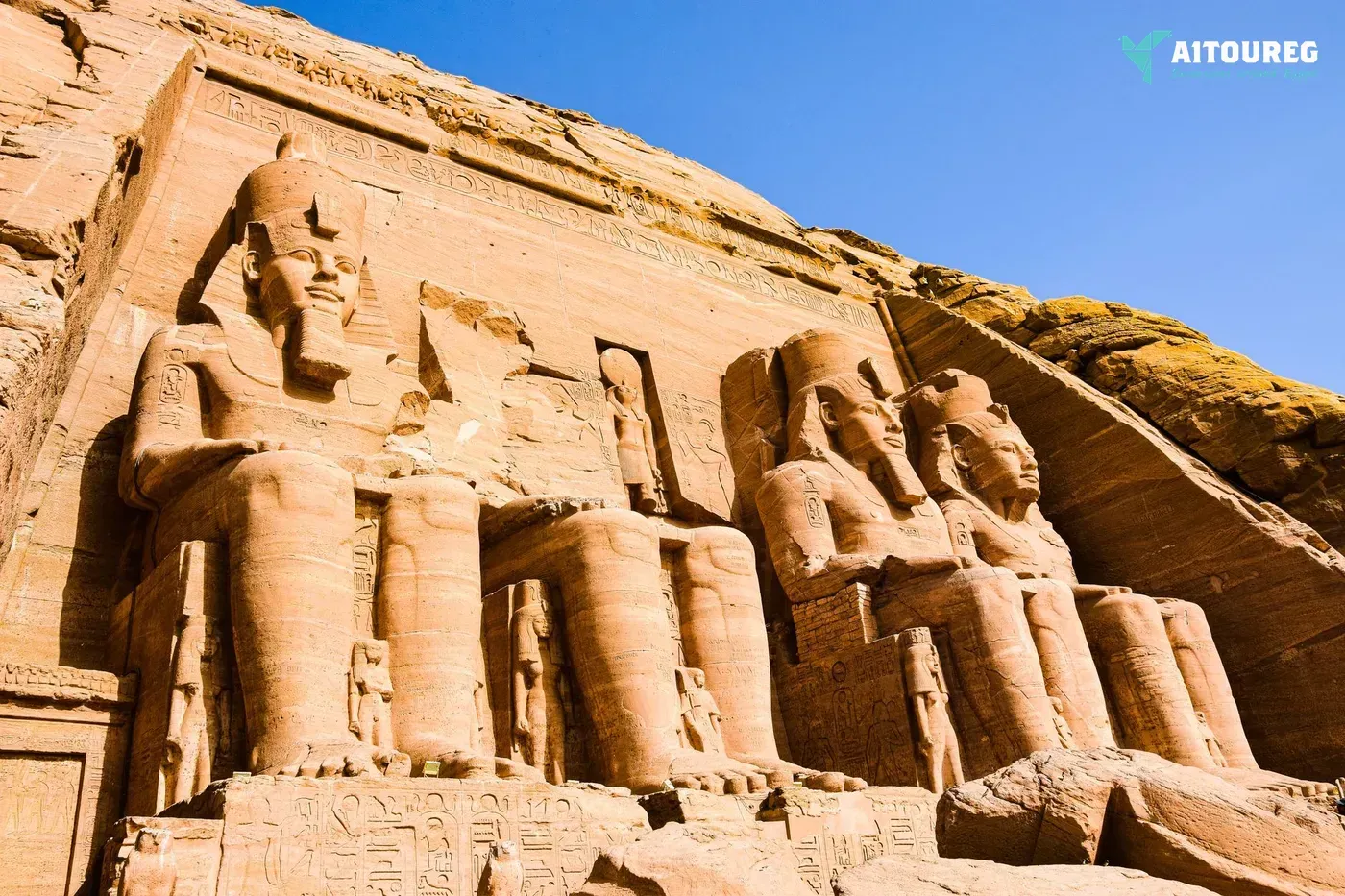
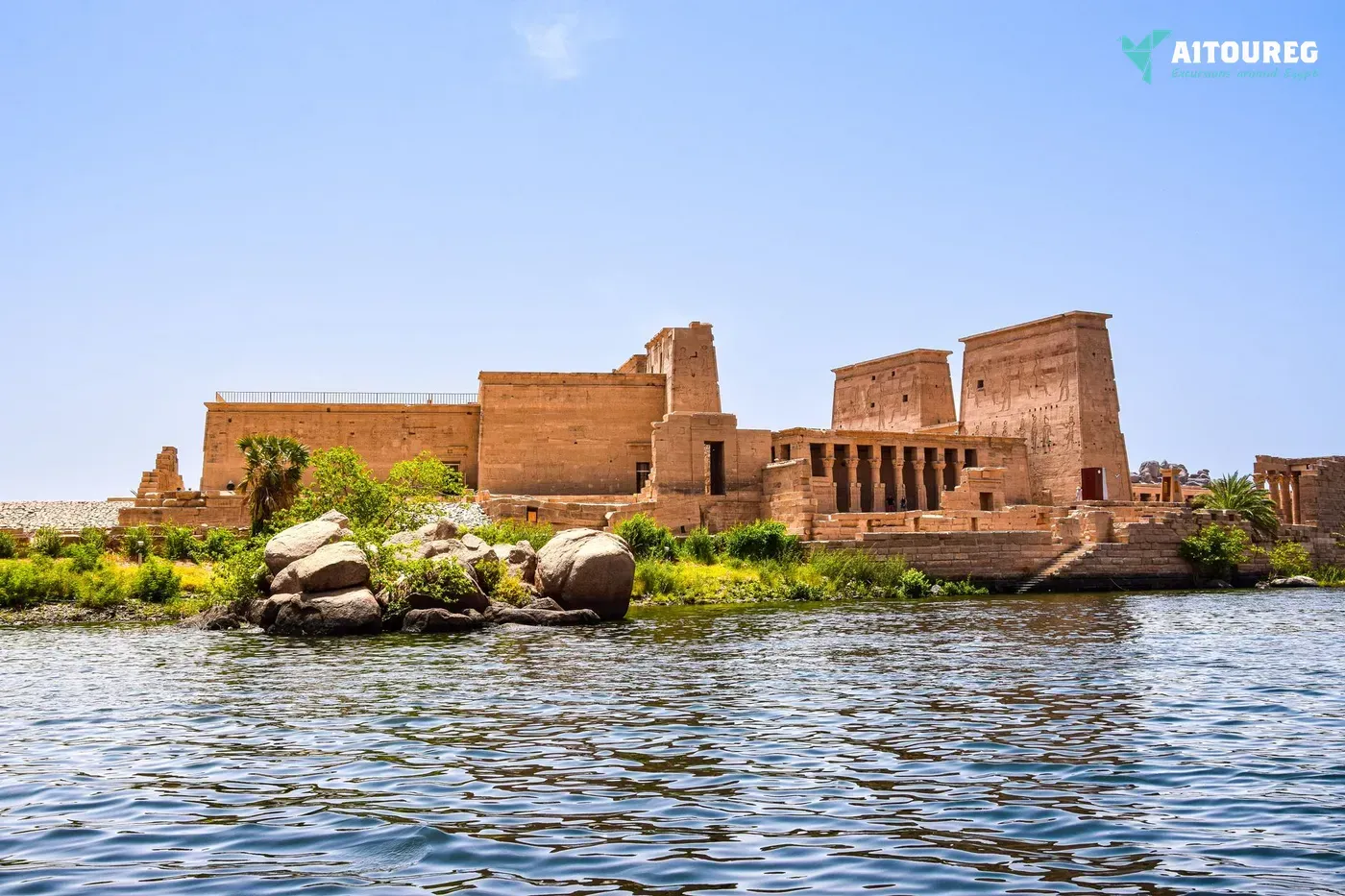
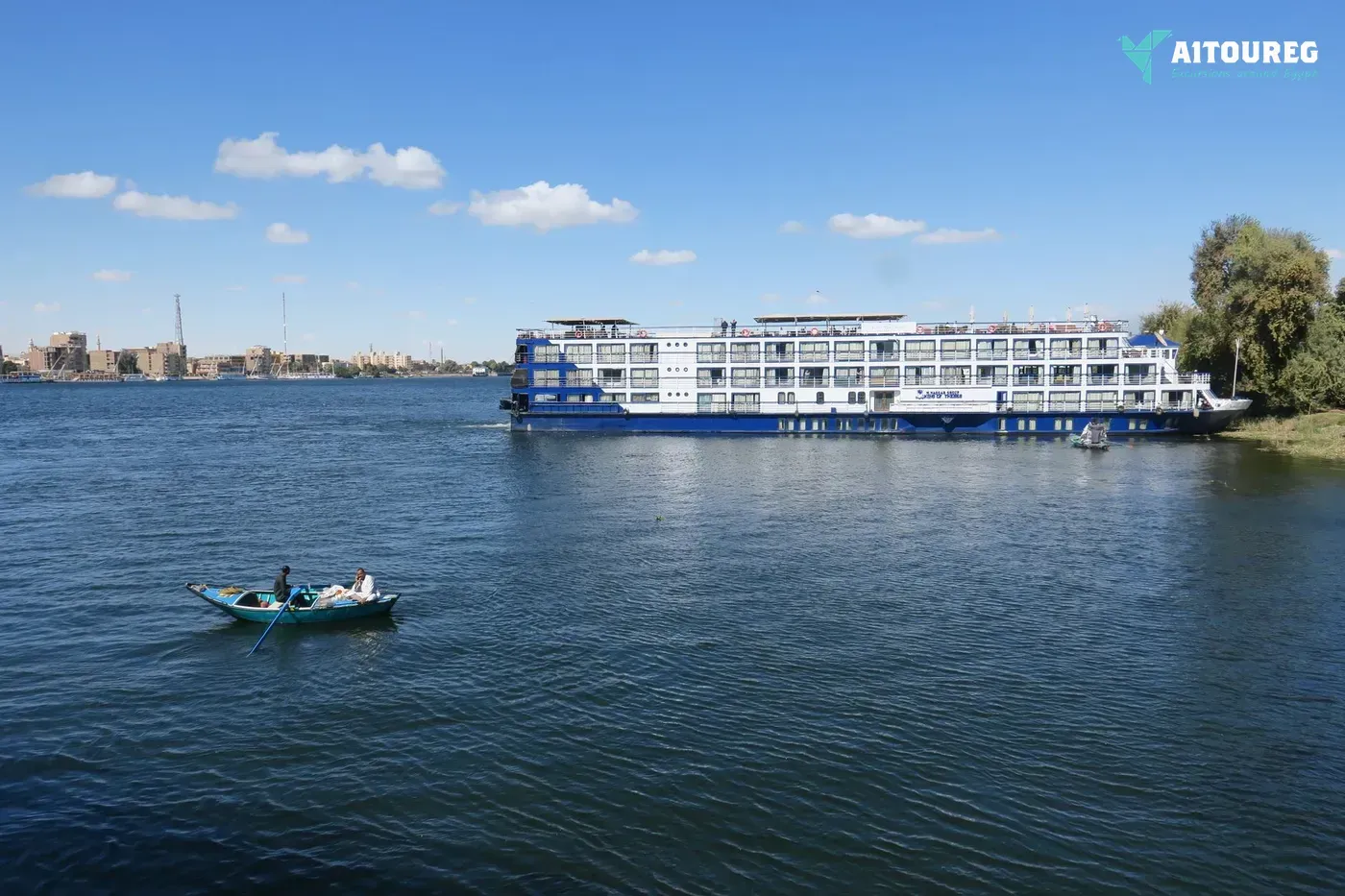
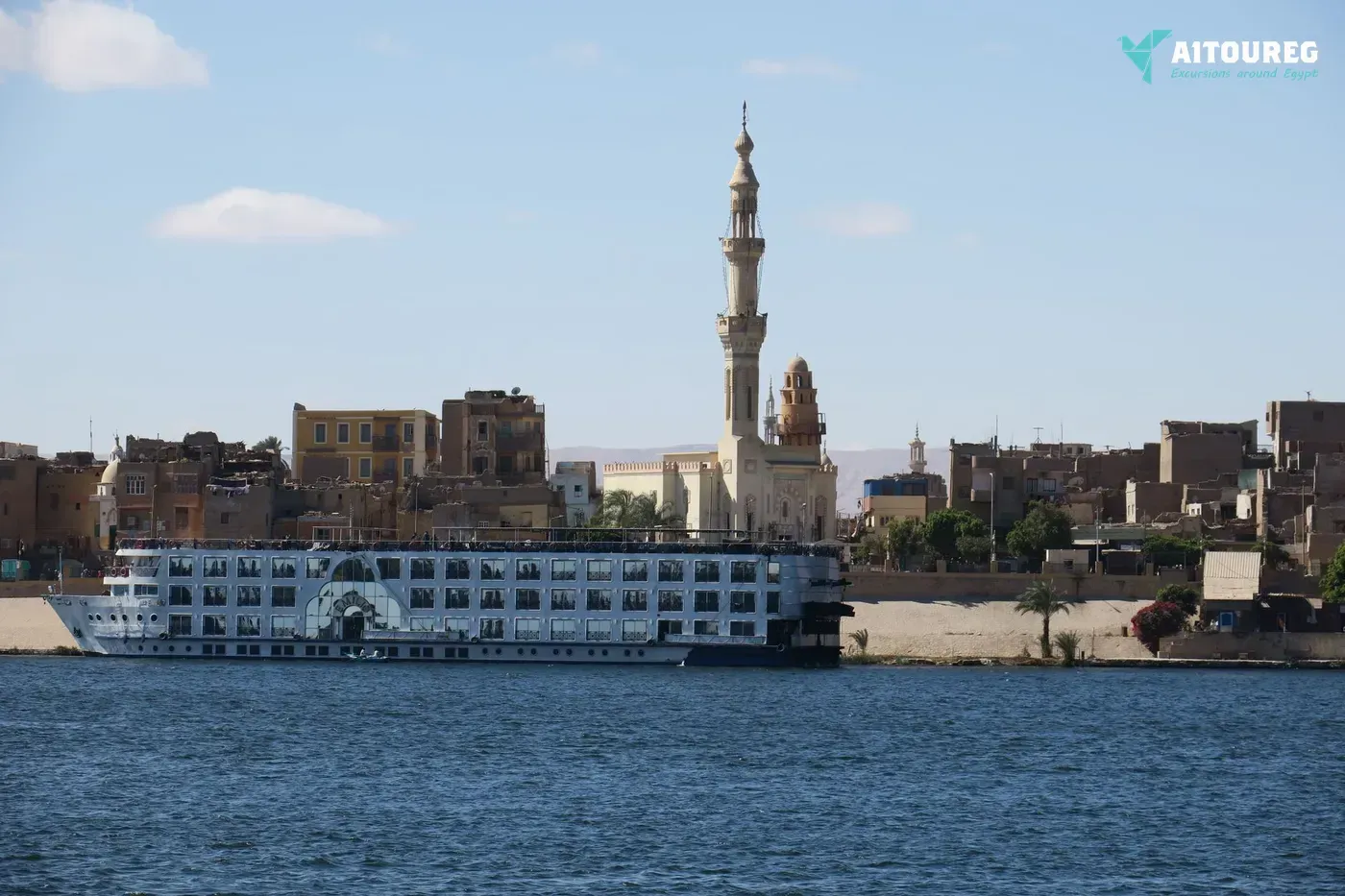
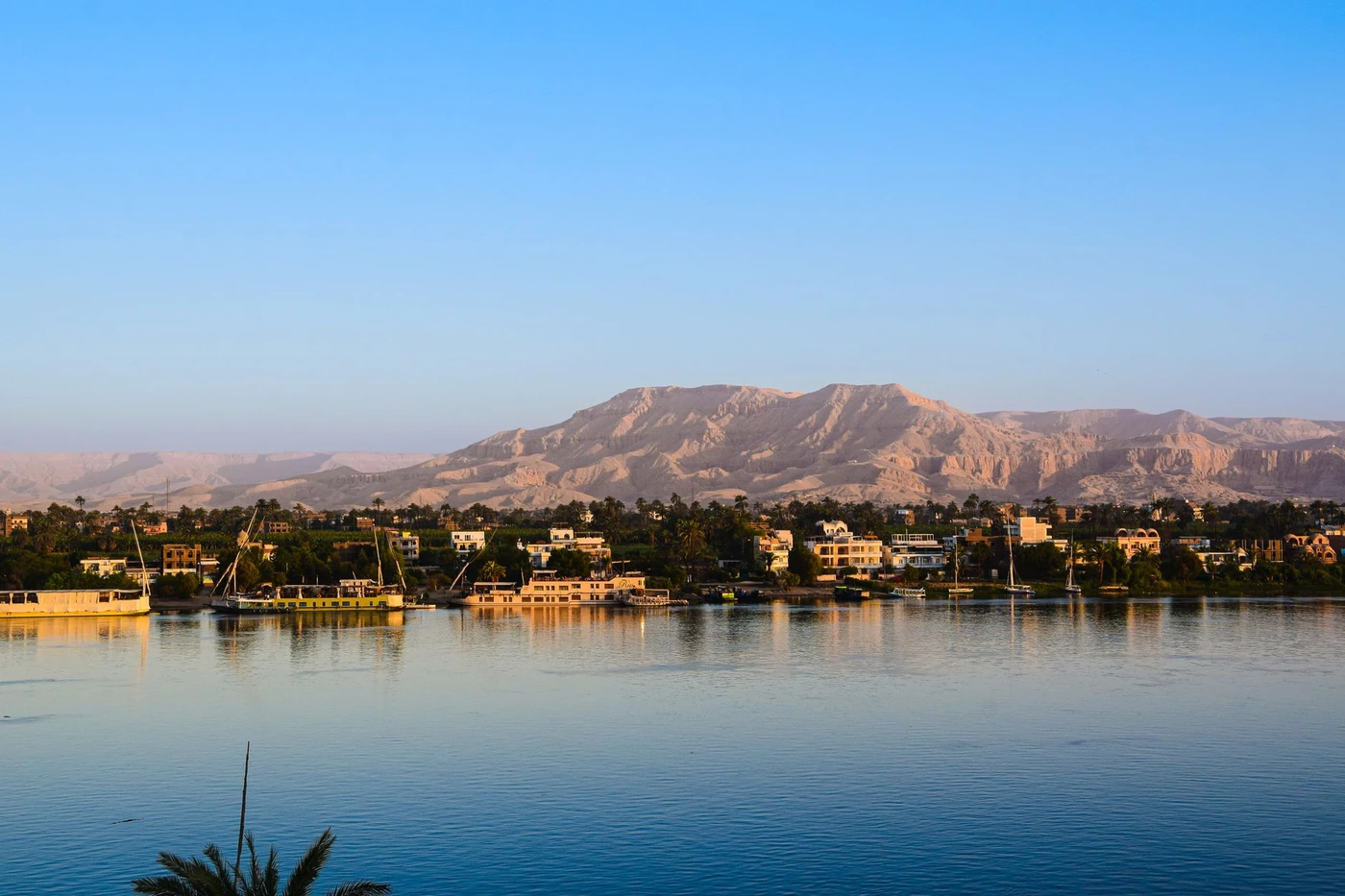
The Nile section starts in Aswan, with Abu Simbel setting the tone for the cruise. The temples were moved to higher ground during construction of the Aswan Dam, and a guide can explain the reliefs and the relocation project as you explore their scale. You also visit Philae Temple, reached by boat on its island setting, before spending 4 days cruising through the river scenery and archaeological sites between Aswan and Luxor.
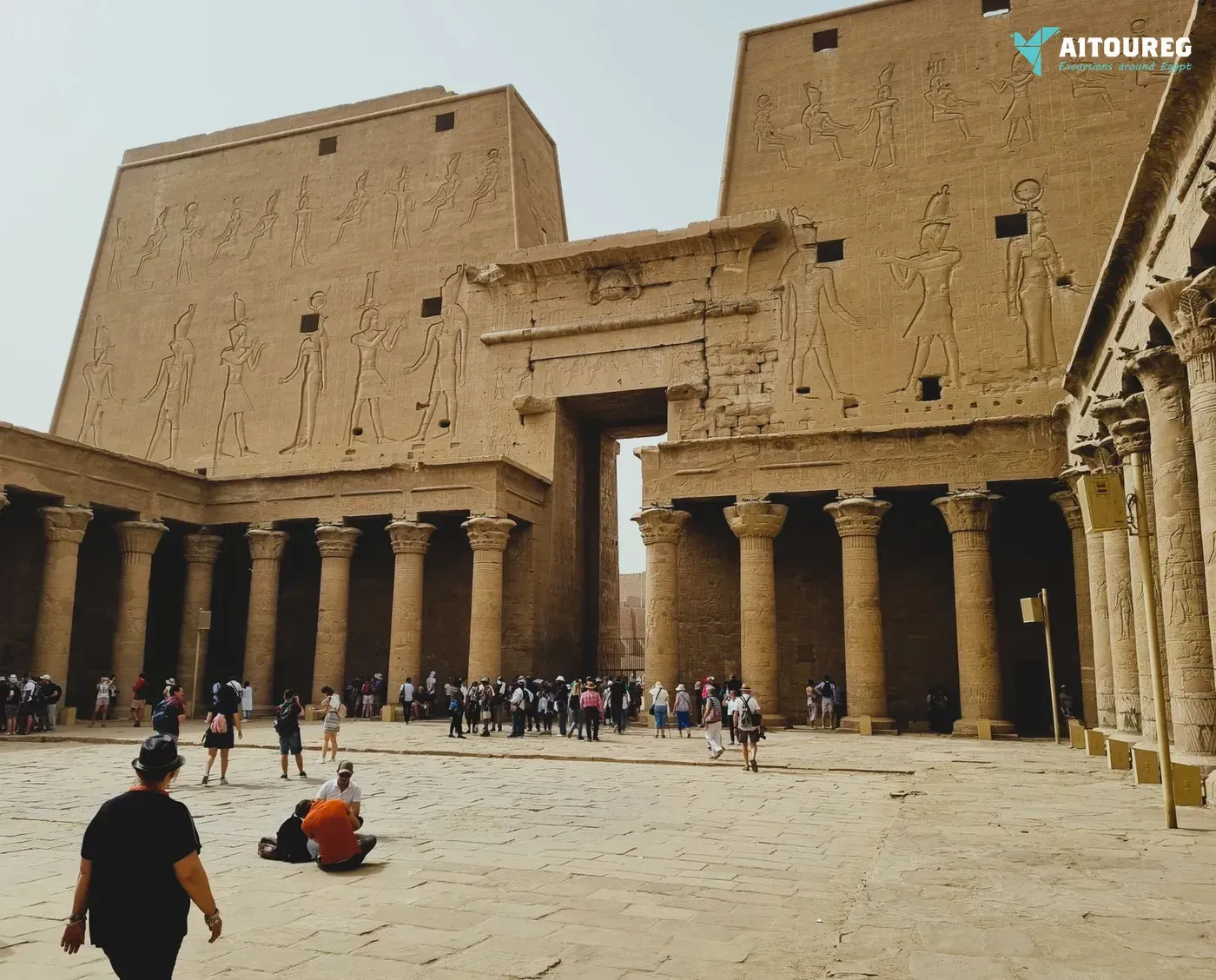
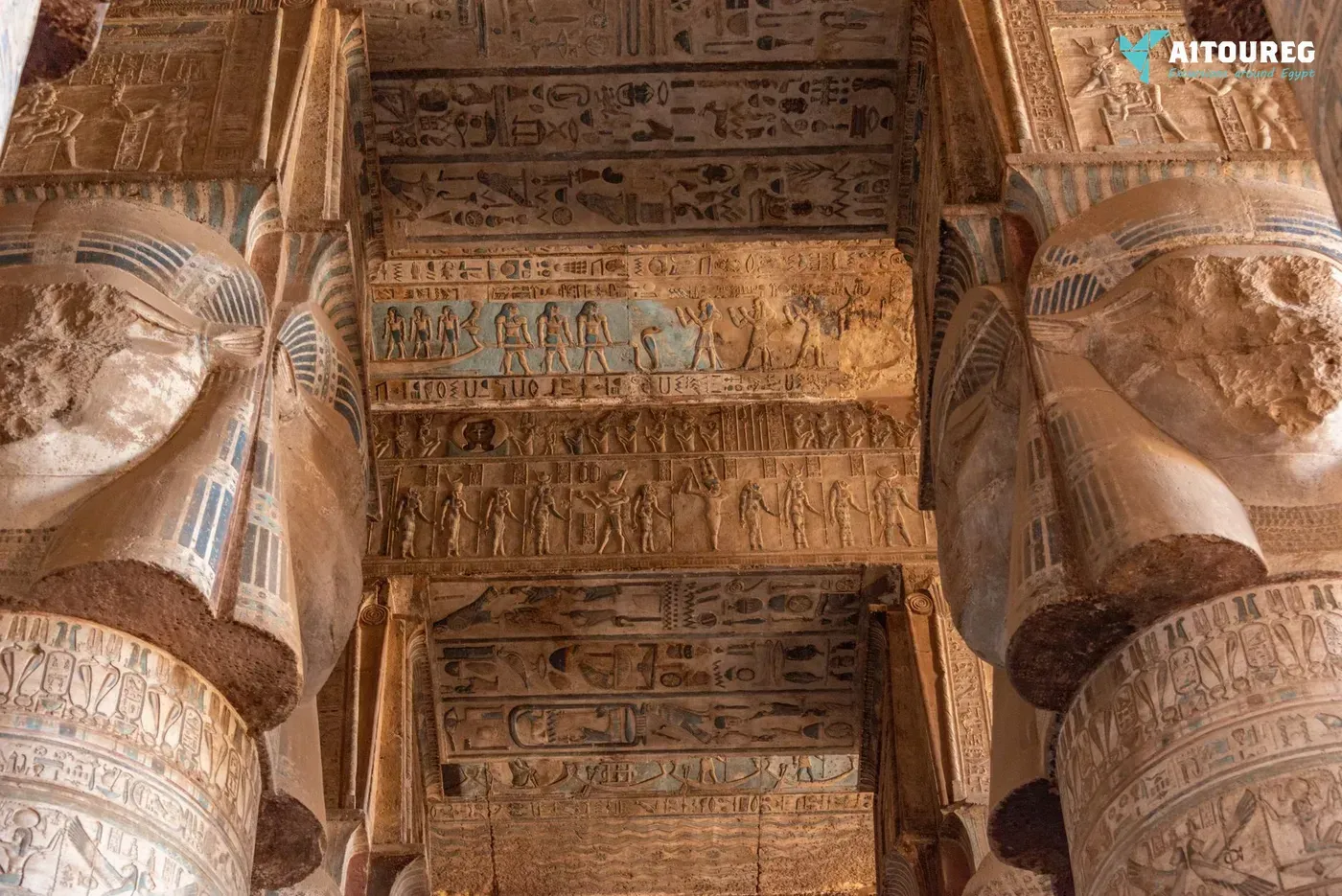
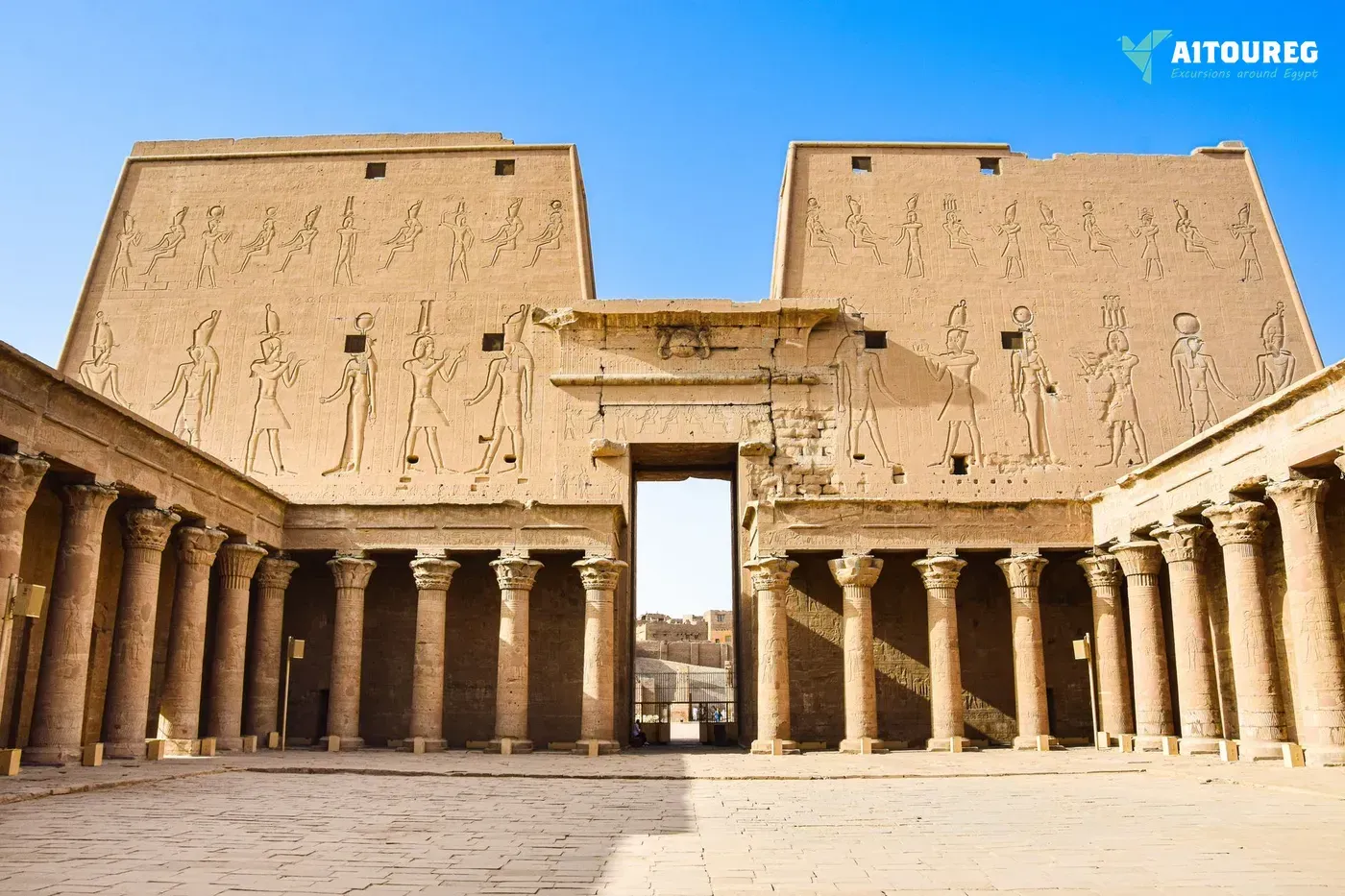
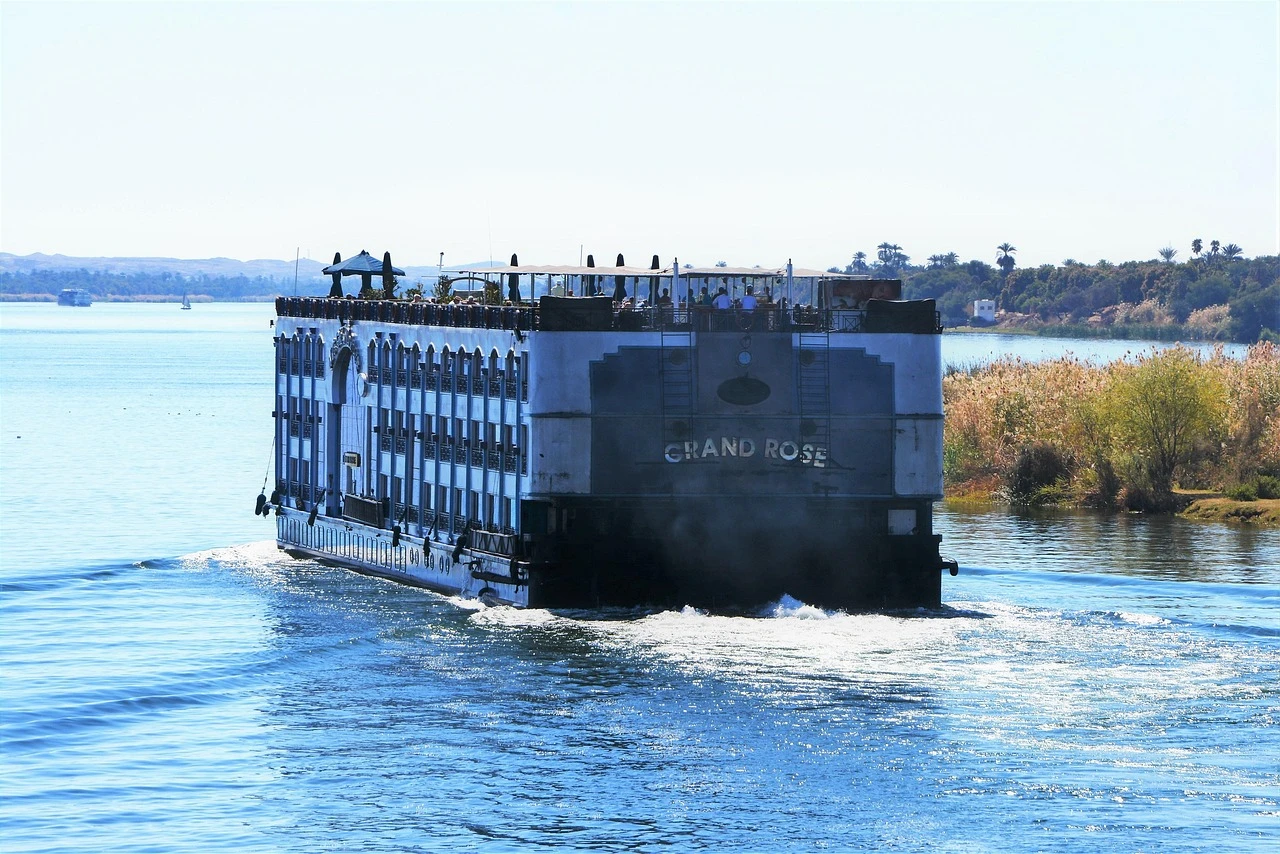
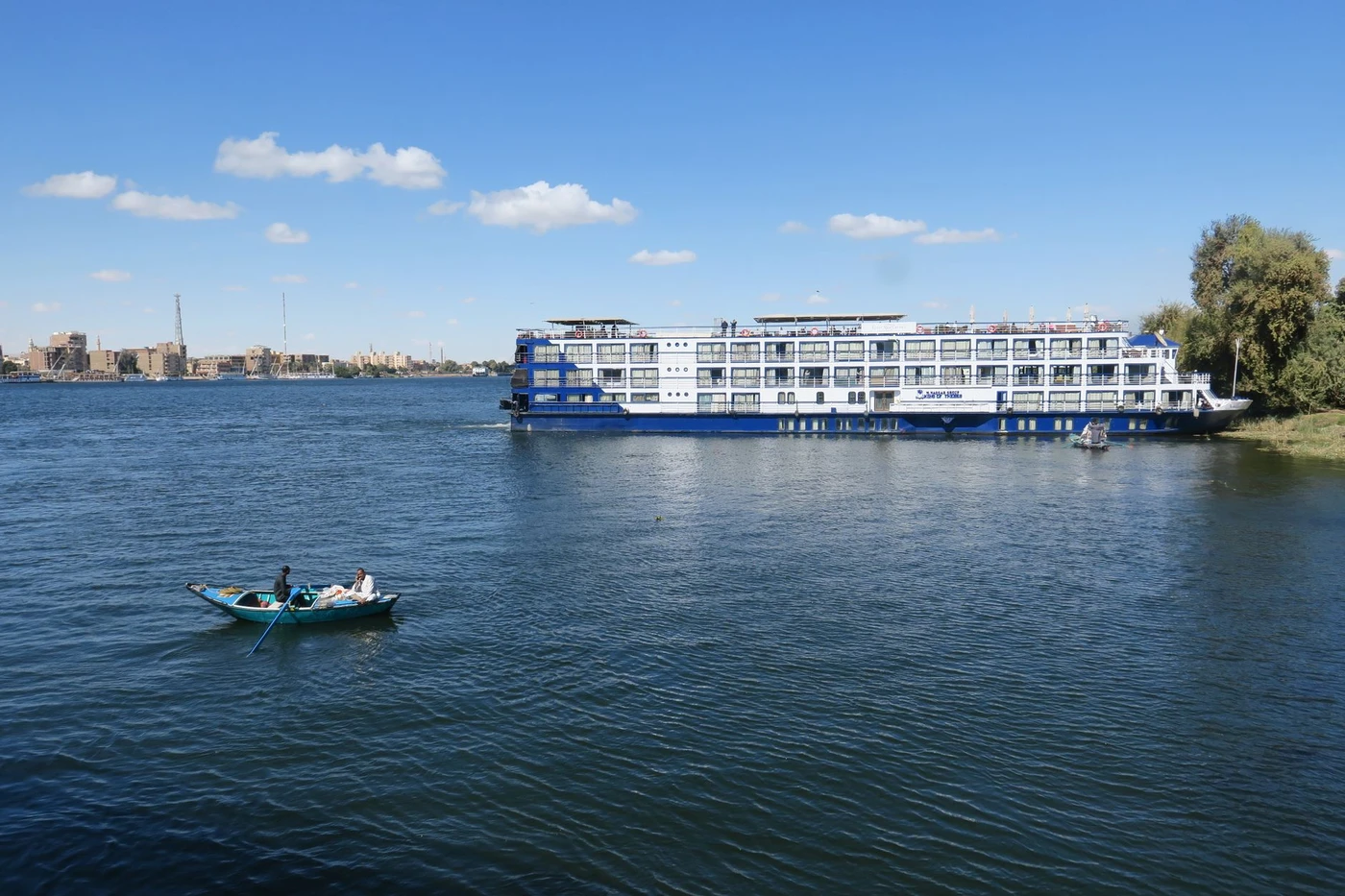
The cruise stops at Kom Ombo Temple, built for Sobek and Horus, then Edfu, where the well-preserved Temple of Horus has a tall entrance gateway and broad inner courts. The visits add variety to the sailing days without crowding the schedule. Meals follow the sightseeing programme, while the slower hours on board let you watch villages, fields and the desert edge move past the Nile.
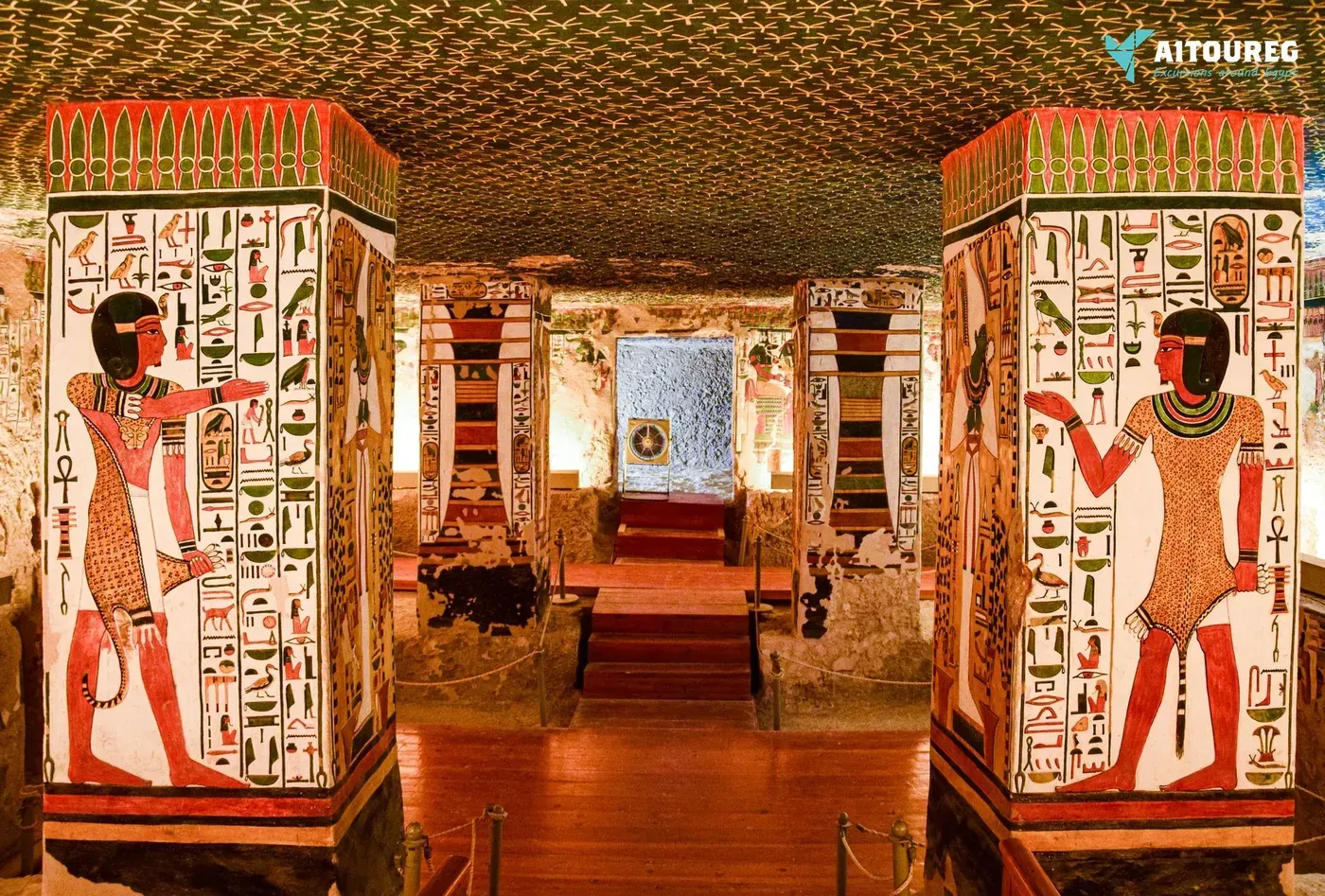
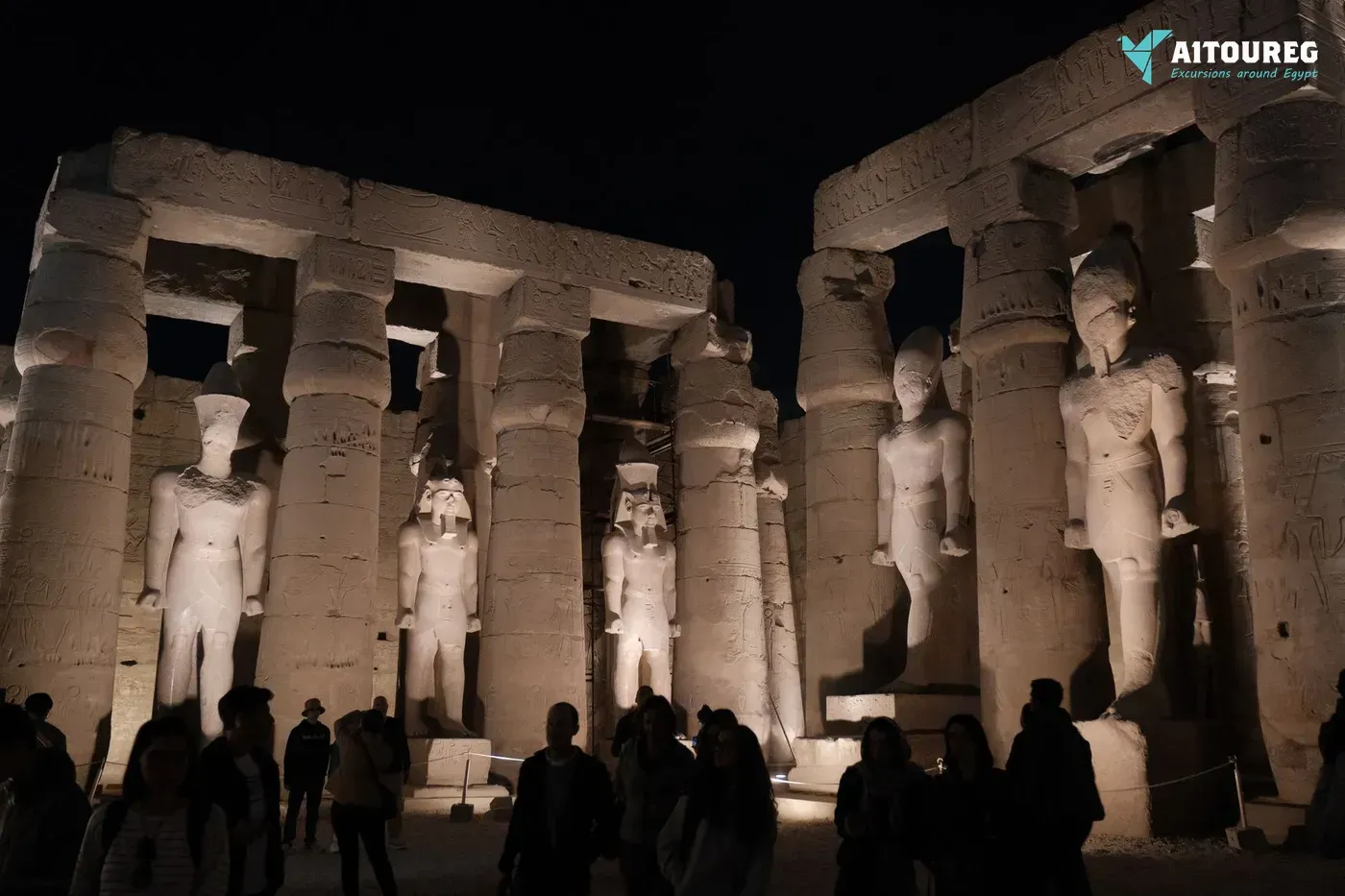
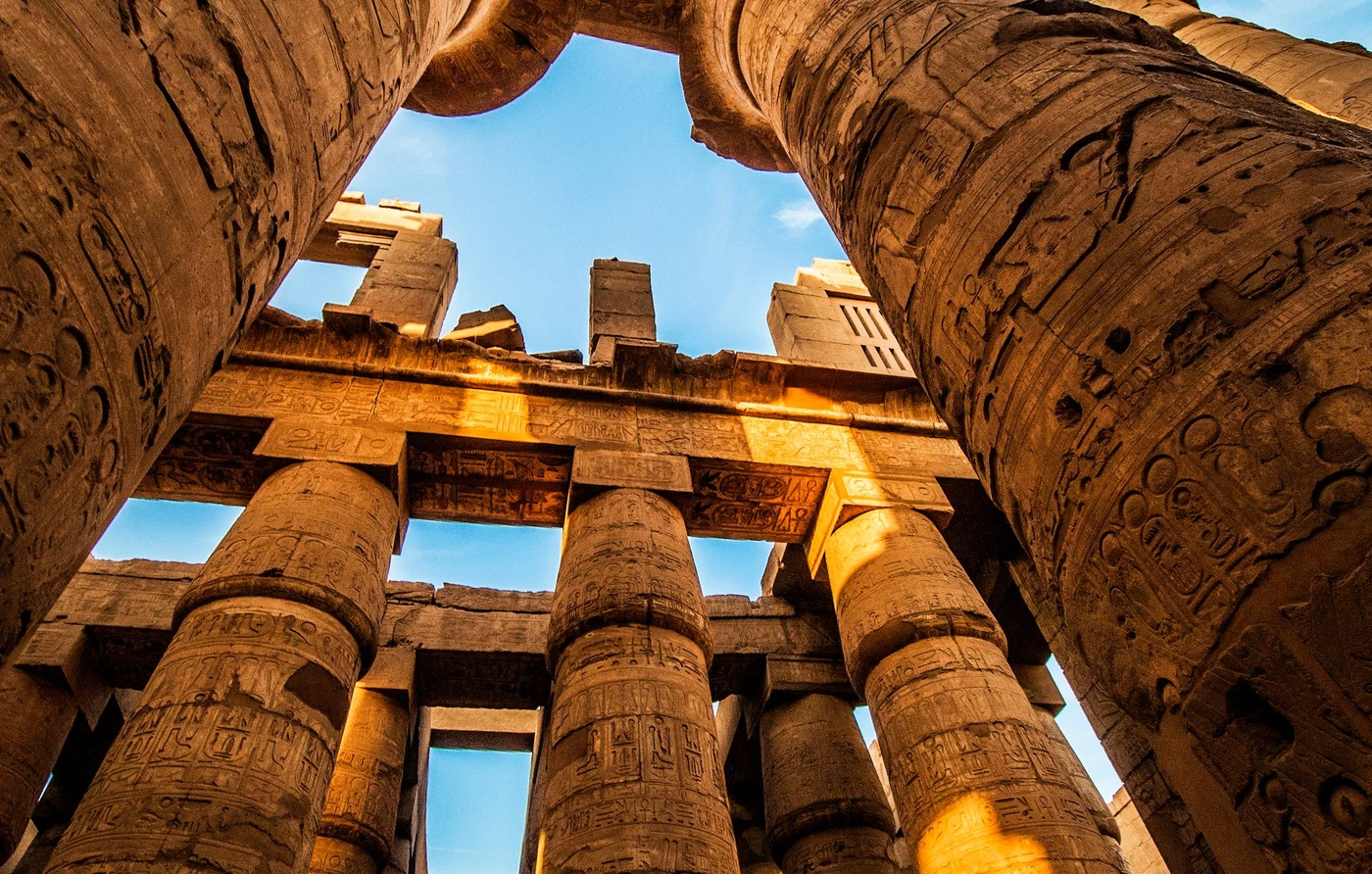
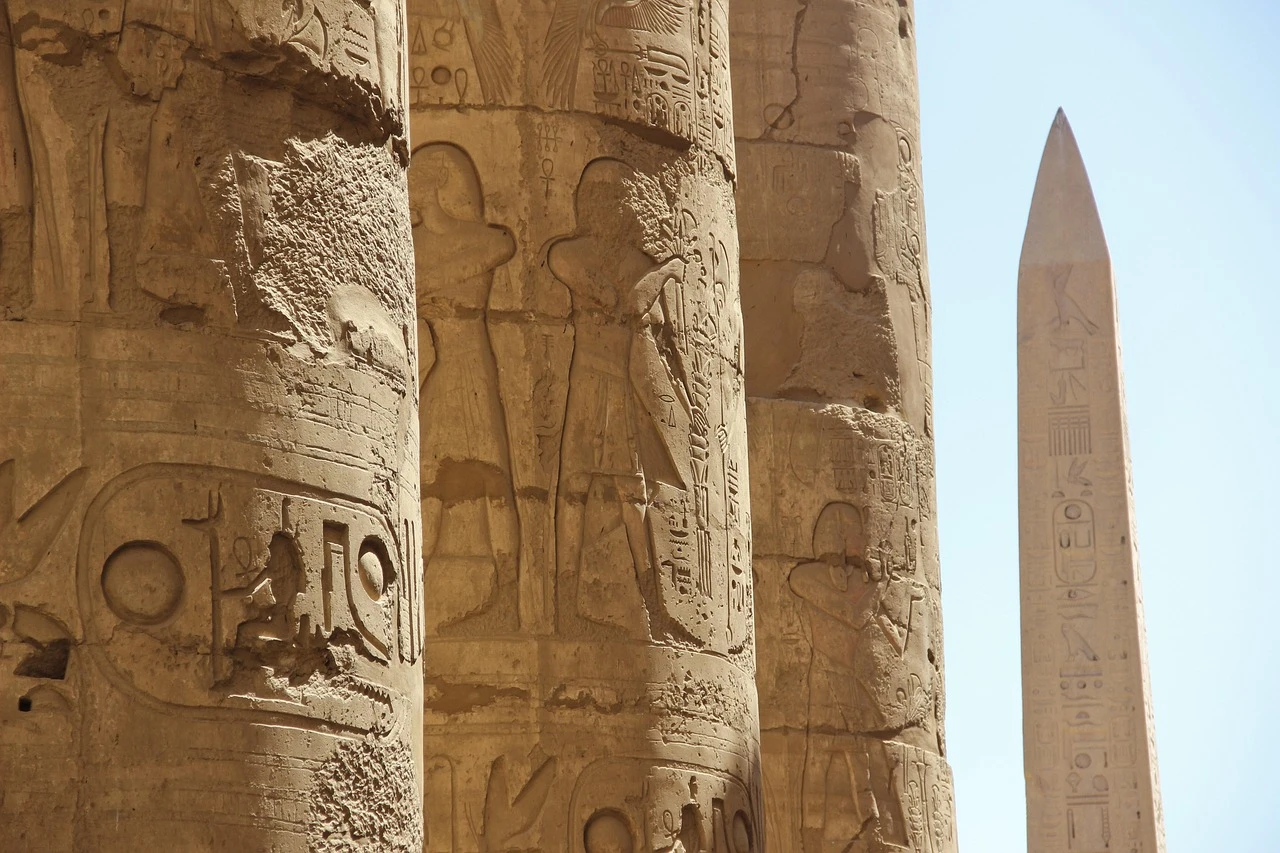
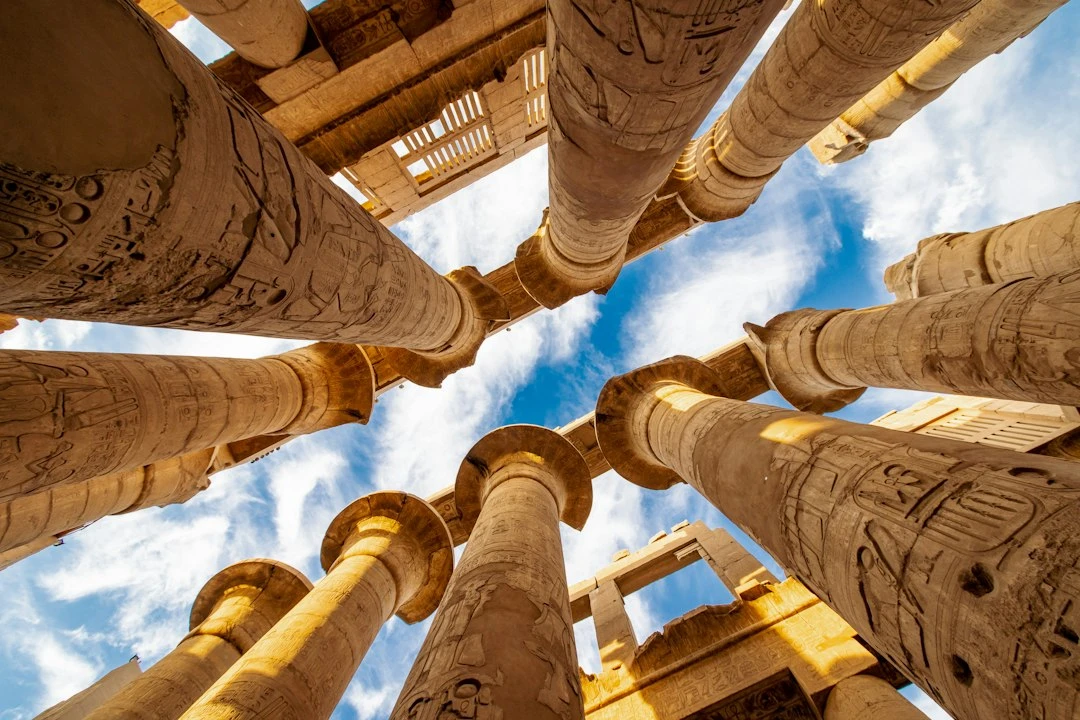
Luxor brings the west and east banks into one part of the itinerary. In the Valley of the Kings, you enter selected tombs decorated inside the hills, while Queen Hatshepsut Temple rises in terraces below the cliffs. Karnak Temple rewards time among its columns, courtyards and sacred lake, and Luxor Temple changes character as the light moves across its stonework. Together, these sites show why Luxor is a key stop on a first visit to Egypt.
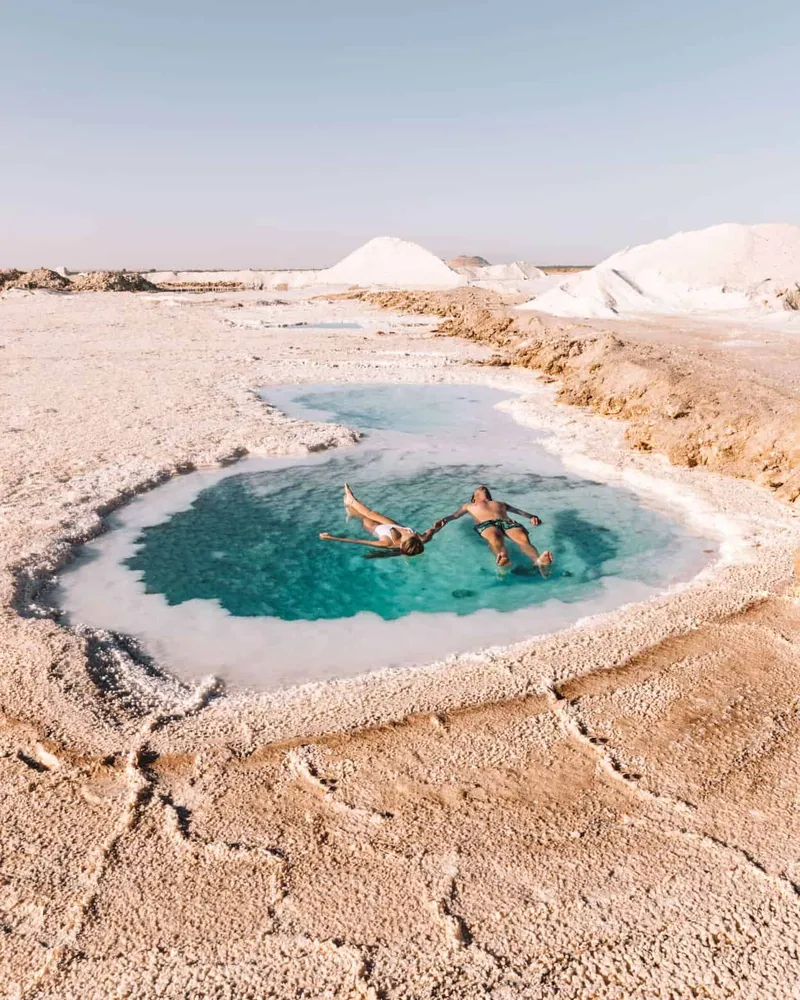
Siwa gives the trip a different rhythm. At the Fortress at Shali, mud-brick walls reveal how local materials shaped the old town. The Temple of the Oracle and Gebel Al Mawta bring more history to the day, while Cleopatra’s Bath is a natural spring where you can stop between visits. The oasis section runs through palm groves, salt lakes and open sand, with time to visit the hot springs instead of passing quickly through the town.
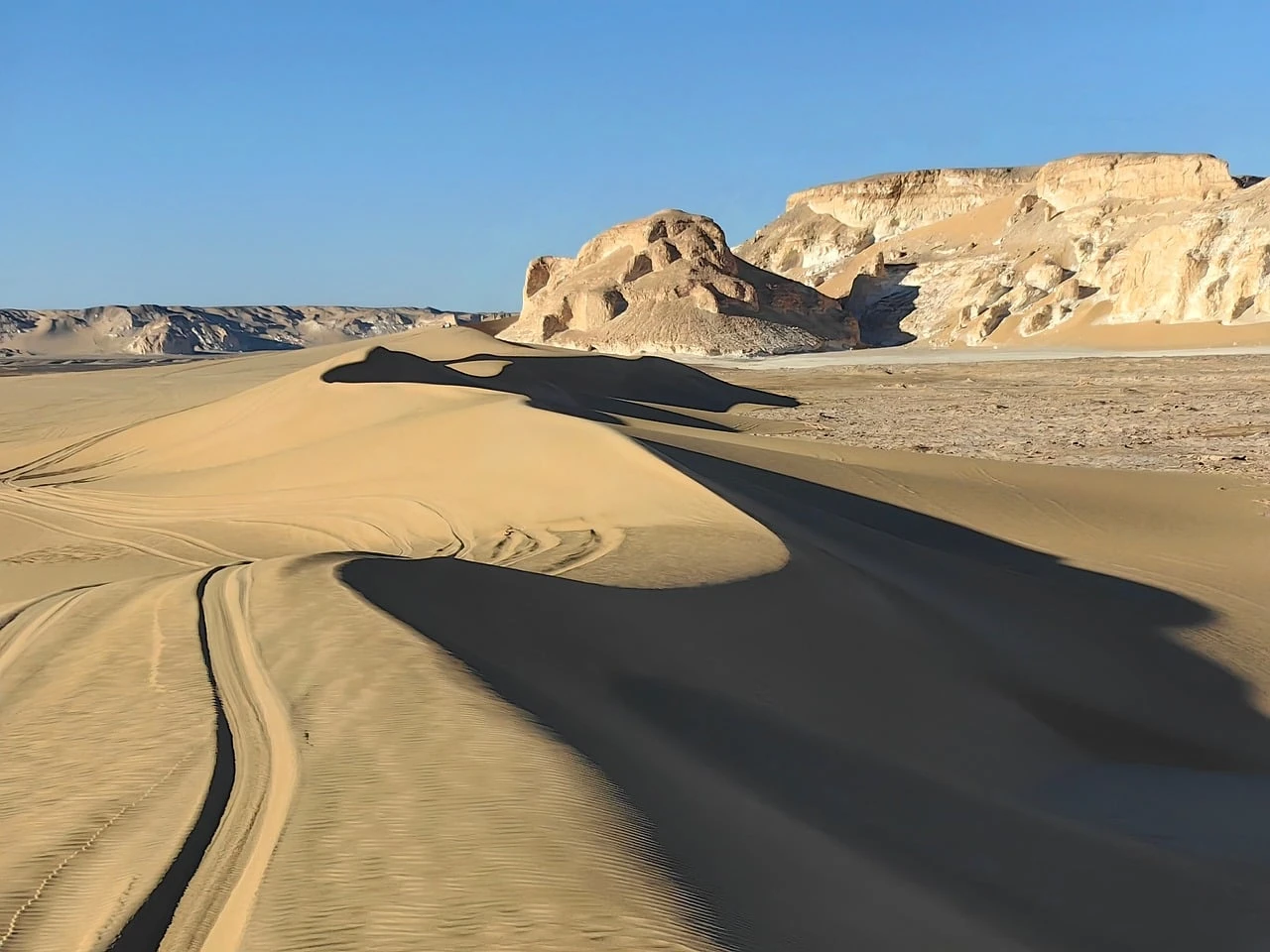
The final desert route enters the Great Sand Sea before reaching the unusual rock formations of the Valley of Agabat. You pass the Black Mountain and the Crystal Mountain on the way to the White Desert, where chalk formations rise from pale ground. A night in the White Desert includes dinner at camp, a clear change from hotel and cruise accommodation, followed by a quiet desert morning before the return journey. Camp arrangements are simple, practical and dependent on local conditions.
This tour suits travellers looking for a broad first experience of Egypt who are comfortable with several long transfers, early starts and walking on uneven ground. The Nile cruise provides a break between temple visits, while the desert sections call for flexible clothing, sun protection and patience on rougher roads. A licensed Egyptologist guides the main historical sites, and our team coordinates transport, accommodation and sightseeing so the route feels like one organised trip rather than separate bookings. Please tell us before travel about mobility needs, dietary requirements or medical concerns so we can advise on suitability and planning.
Entrance fees for the included monuments and attractions
Transportation by air-conditioned vehicle and suitable desert transport
Pickup and drop-off arrangements according to the confirmed itinerary
Accommodation in hotels and aboard the 4-day Nile cruise
Boat transfers required for Philae Temple
One night of desert camping in the White Desert
Meals as specified in the tour programme
Licensed Egyptologist guide for included historical sightseeing
Any entrance fees or services not identified as included
International or domestic flights unless stated in the confirmed itinerary
Tipping for guides, drivers, cruise staff and desert camp staff
Personal expenses, drinks and laundry
Optional activities or sightseeing not listed in the included programme
Egypt entry visa and travel insurance
Passport and any required visa documents
Comfortable walking shoes with grip for temples, tombs and uneven desert ground
Refillable water bottle and personal medication
Camera, spare batteries or a power bank
Small overnight bag for the desert camp
Sun hat, sunglasses, high-factor sunscreen and lip balm
Light, breathable clothing and a warm layer for desert evenings and early mornings
Swimwear and a towel if you plan to use Cleopatra’s Bath or a hot spring
This 15-day Egypt itinerary includes Cairo sightseeing, a 4-day Nile cruise, Abu Simbel, Aswan, Luxor, Siwa Oasis, and desert camping in the White Desert, with guided visits to Egypt’s top highlights and transfers between the main stages of the trip.
The Nile section includes Philae Temple, the Aswan Dam, Edfu, Kom Ombo Temple, Luxor Temple, the Valley of the Kings, Queen Hatshepsut Temple, and Karnak Temple. In Siwa, you visit the El Alamein Tombs, the Fortress at Shali, the Temple of the Oracle, Gebel Al Mawta, and Cleopatra’s Bath.
This is a varied 15-day itinerary with sightseeing days, a 4-day Nile cruise, desert transfers, and one night in the White Desert, so you should expect a full but carefully paced travel schedule rather than a relaxed beach holiday.
The cruise lets you discover the many archaeological treasures between Aswan and Luxor in a practical order, including Edfu and Kom Ombo before reaching Luxor. The desert section is an adventure trip through the Great Sand Sea, the White Desert, and the Valley of Agabat, with time to discover hot springs when conditions and access allow.
Our team arranges the planned pickups and transfers between airports, accommodation, the Nile cruise, sightseeing stops, and the desert camps, with the exact pickup details confirmed in your final itinerary.
Travel in the desert involves longer road sections and 4x4 vehicles, while the Nile programme follows the cruise schedule. The route also includes the Black Mountain and Crystal Mountain, and the transfer plan may be adjusted if road access, local conditions, or site opening arrangements change.
This Egypt itinerary can suit active families and many travellers, but it is less suitable for anyone who cannot manage uneven ground, stairs, boat access, long sightseeing days, or 4x4 desert travel without assistance.
The Valley of the Kings, Queen Hatshepsut Temple, Gebel Al Mawta, the Fortress at Shali, and desert viewpoints may involve steps, sand, or uneven paths. Tell our team about mobility needs, children’s ages, or medical considerations before booking so we can explain the practical limits of the route.
Bring light, breathable clothing, comfortable walking shoes, sun protection, a hat, swimwear, a reusable water bottle, and warmer layers for early mornings and the overnight White Desert camp.
Loose clothing that covers the shoulders and knees is respectful at temples and local communities, including Siwa Oasis. Pack a small overnight bag for the desert, personal medication, toiletries, a torch, and a phone or camera with spare power; keep larger luggage where our team advises.
To book this 15-day Egypt tour, send our team your preferred travel dates, traveller details, and any accommodation, mobility, or dietary requirements so we can confirm the itinerary and arrangements before payment.
Cancellation terms depend on the confirmed booking arrangements, including cruise, accommodation, transport, and desert services, so the applicable policy is provided before you commit. Ask us to clarify the deadlines and any non-refundable services before finalising your booking.
Your unforgettable Egypt journey starts with a booking you can trust.
* Available on selected tours. Flights, cruises and special bookings may have different cancellation policies.
Free cancellation up to 24 hours before activity starts
If you choose to pay online, a secure payment link can be provided after booking. For assistance or alternative payment options, please contact us via WhatsApp.
All our tour operators are licensed and verified by Egyptian tourism authorities.
Learn more about our licensed partners →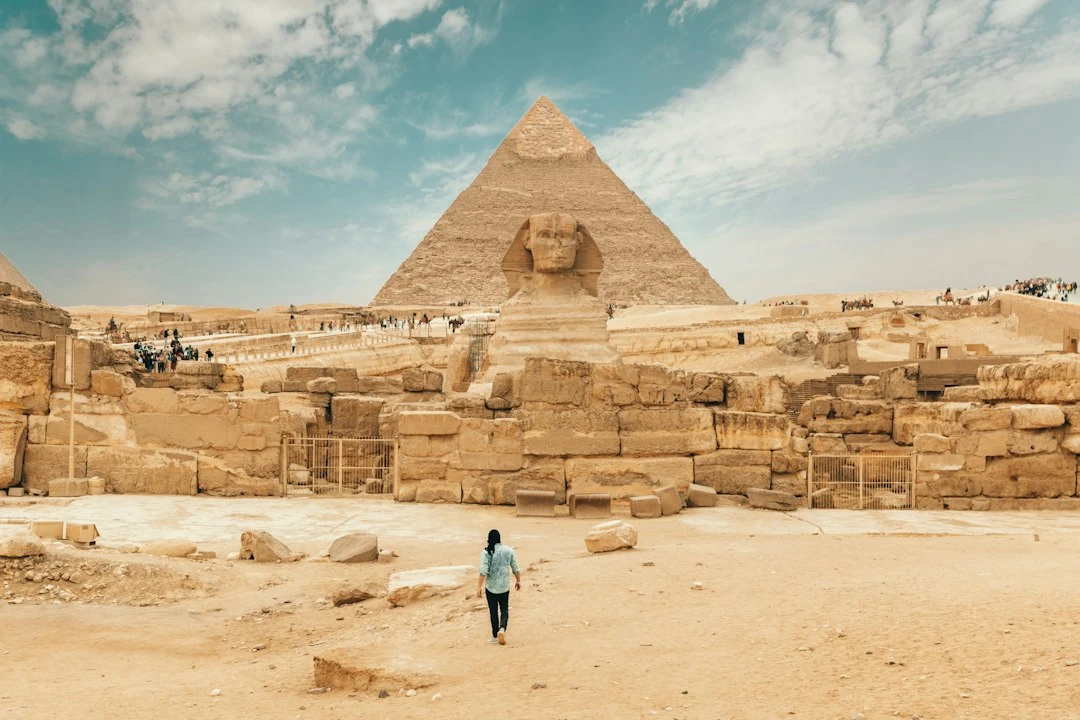

Free cancellation up to 24 hours before activity starts
If you choose to pay online, a secure payment link can be provided after booking. For assistance or alternative payment options, please contact us via WhatsApp.
All our tour operators are licensed and verified by Egyptian tourism authorities.
Learn more about our licensed partners →
Your Itinerary
Arrive in Cairo, where our representative meets you at the airport and helps with the transfer to your hotel. After passport control and baggage collection, the journey into the city gives you your first look at Cairo’s busy streets and broad Nile-side avenues.
The rest of the day is kept light so you can recover from your flight. Your guide reviews the programme with you, confirms the following day’s arrangements and answers practical questions about clothing, entry procedures and moving around the city. If your arrival time allows, you can take a short walk near the hotel or rest before dinner.
This first evening is deliberately simple. A good night’s sleep prepares you for the archaeological sites ahead, beginning with the pyramids and Sphinx.
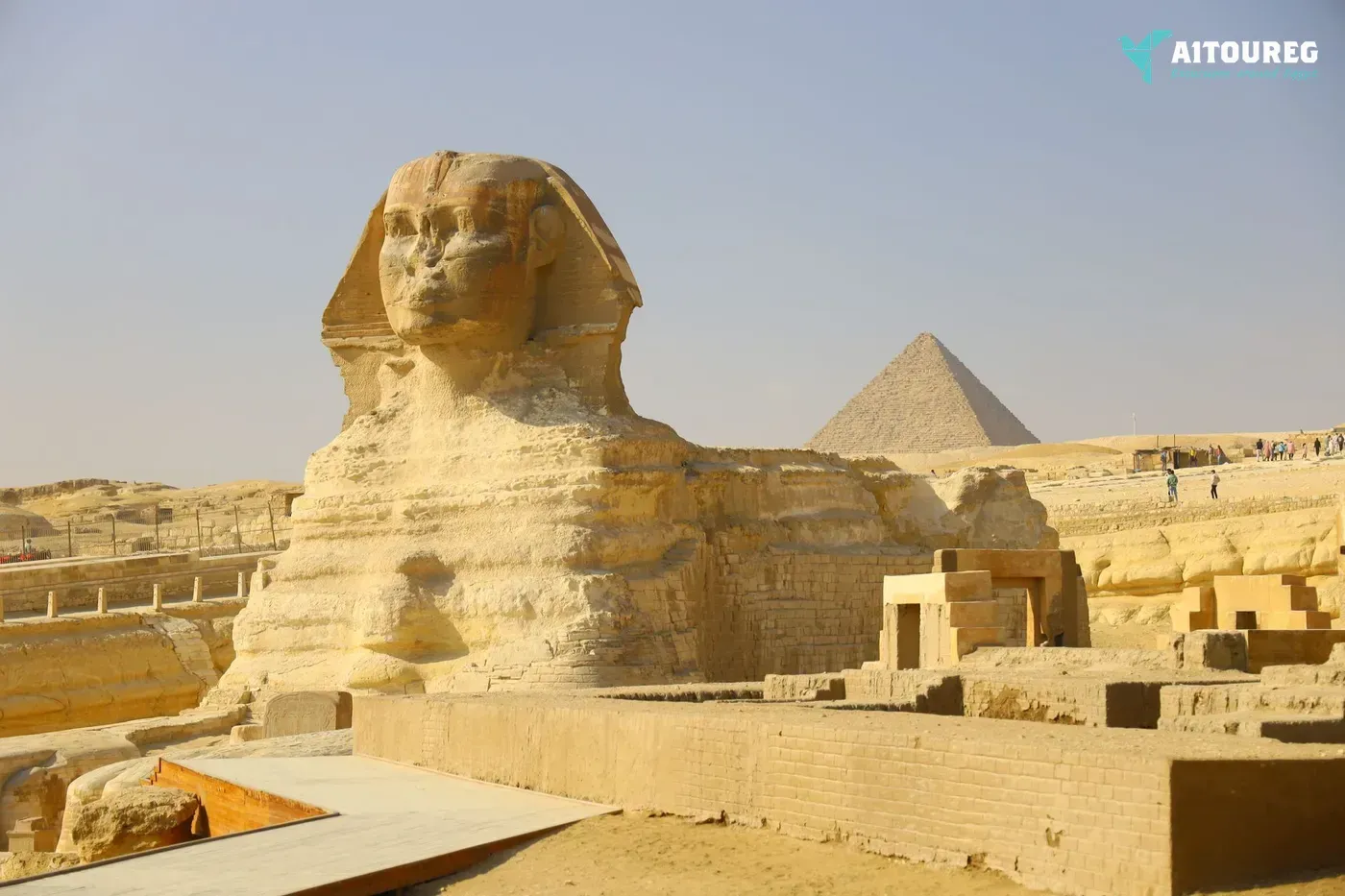
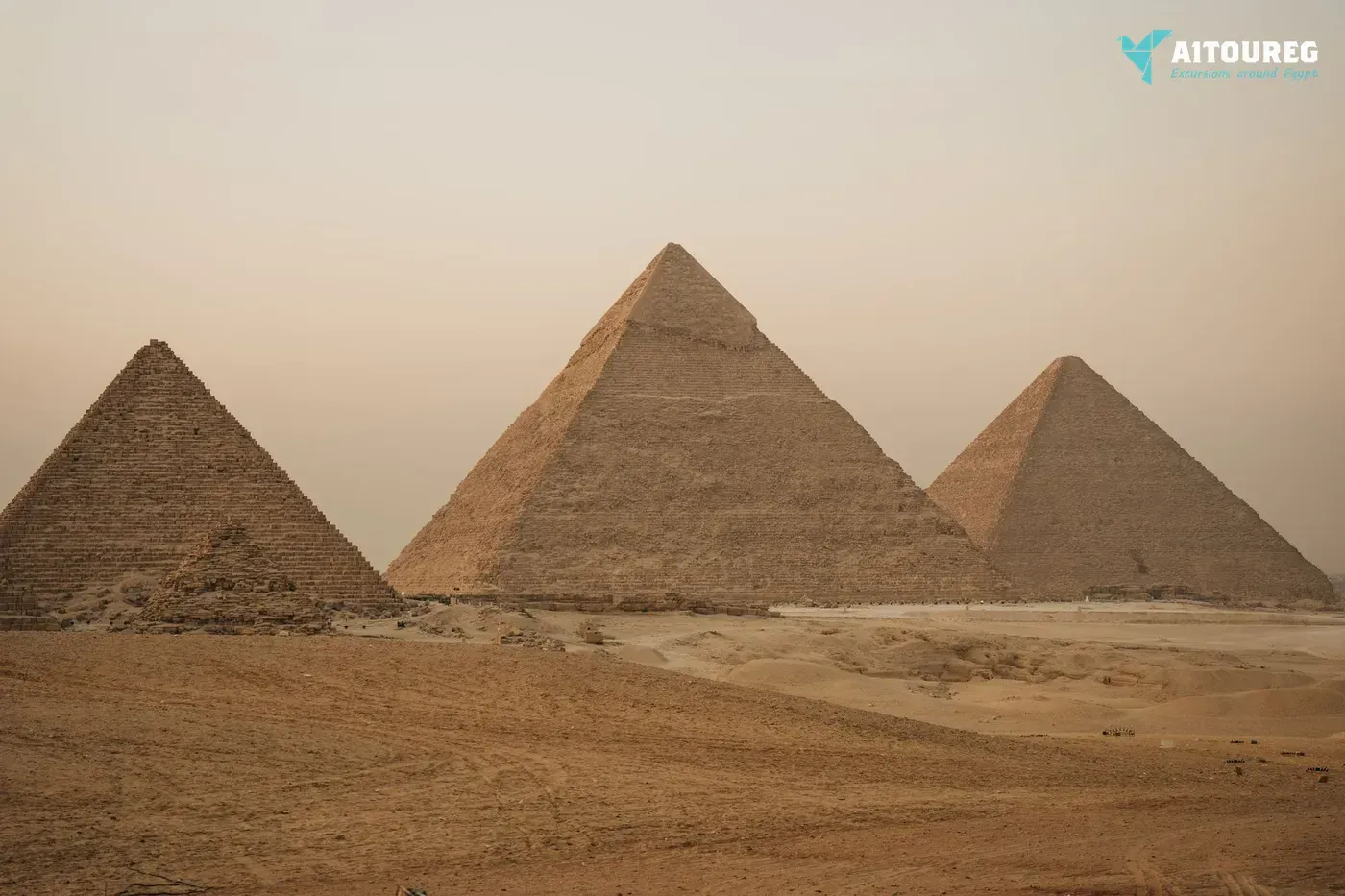
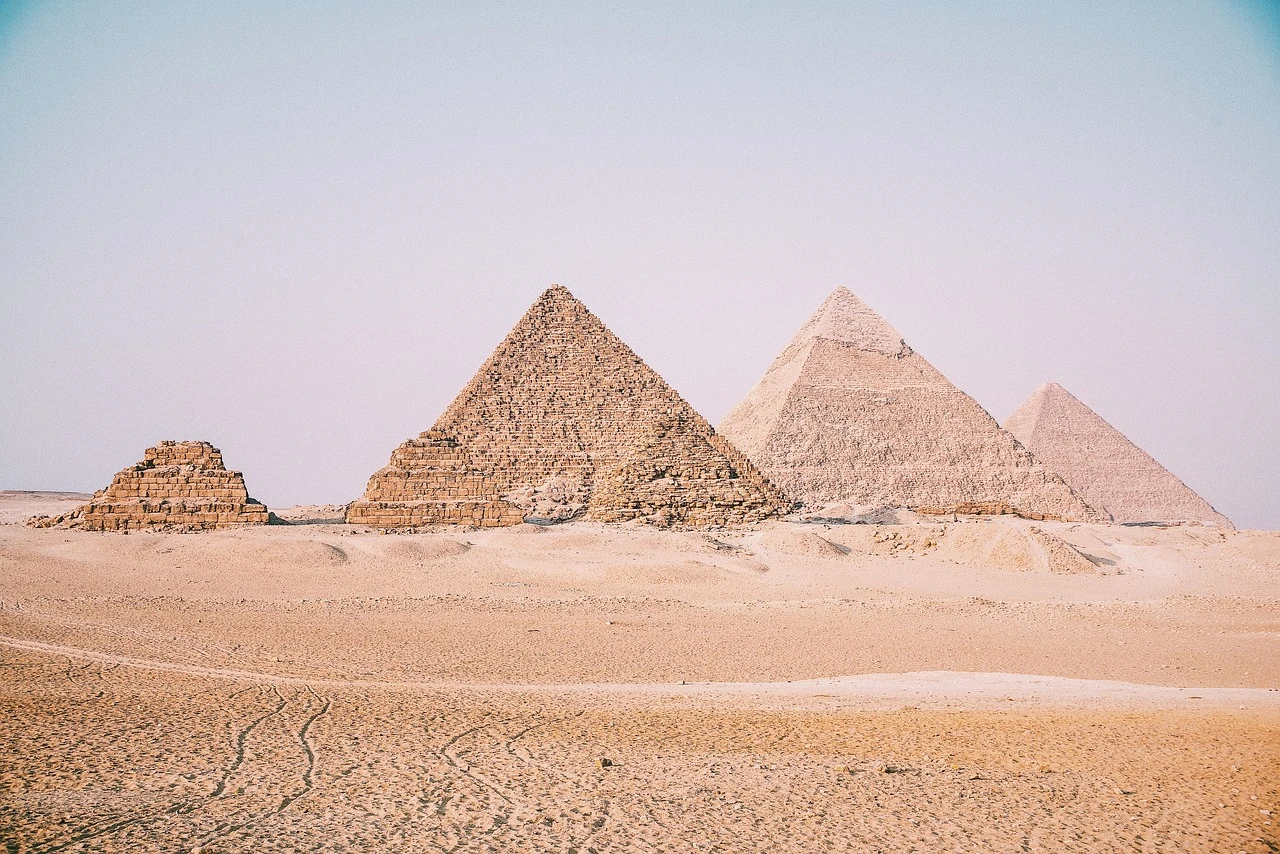
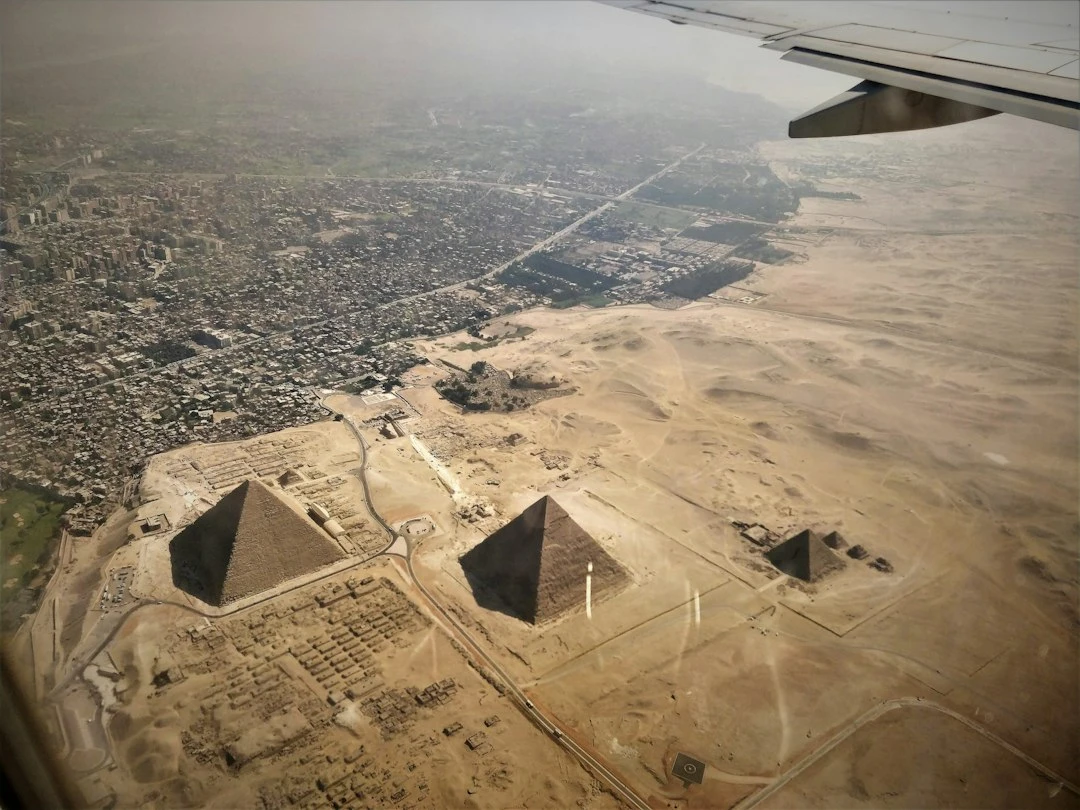
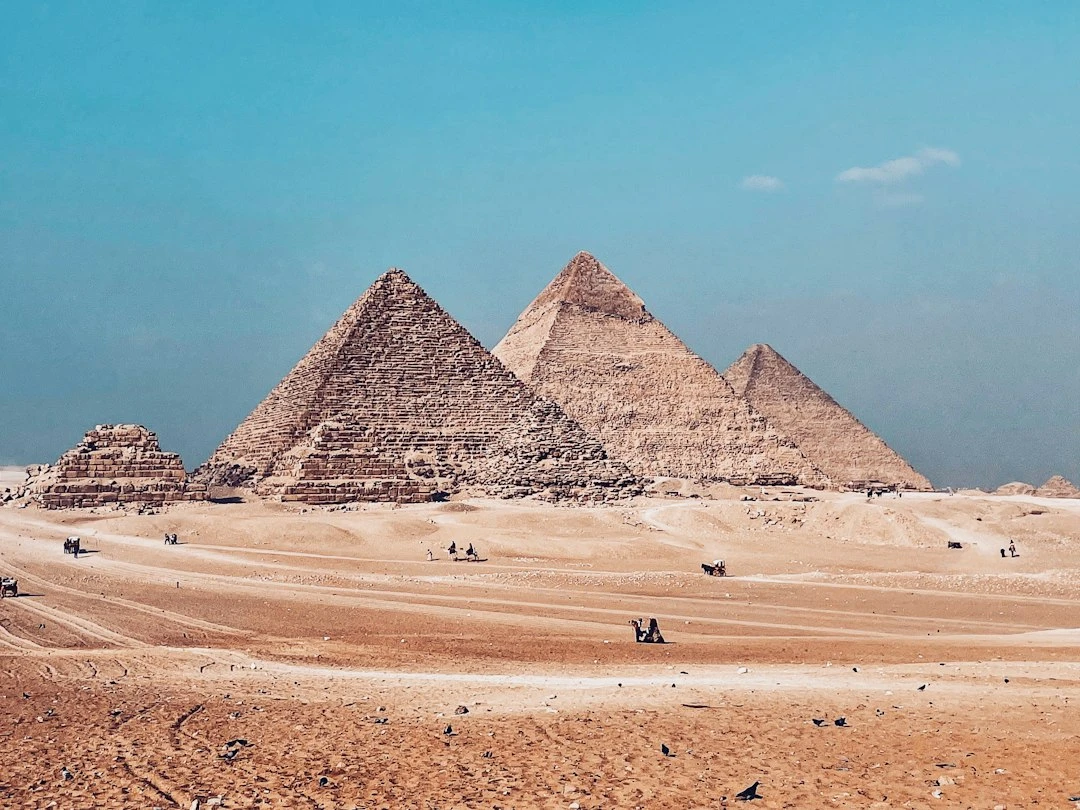
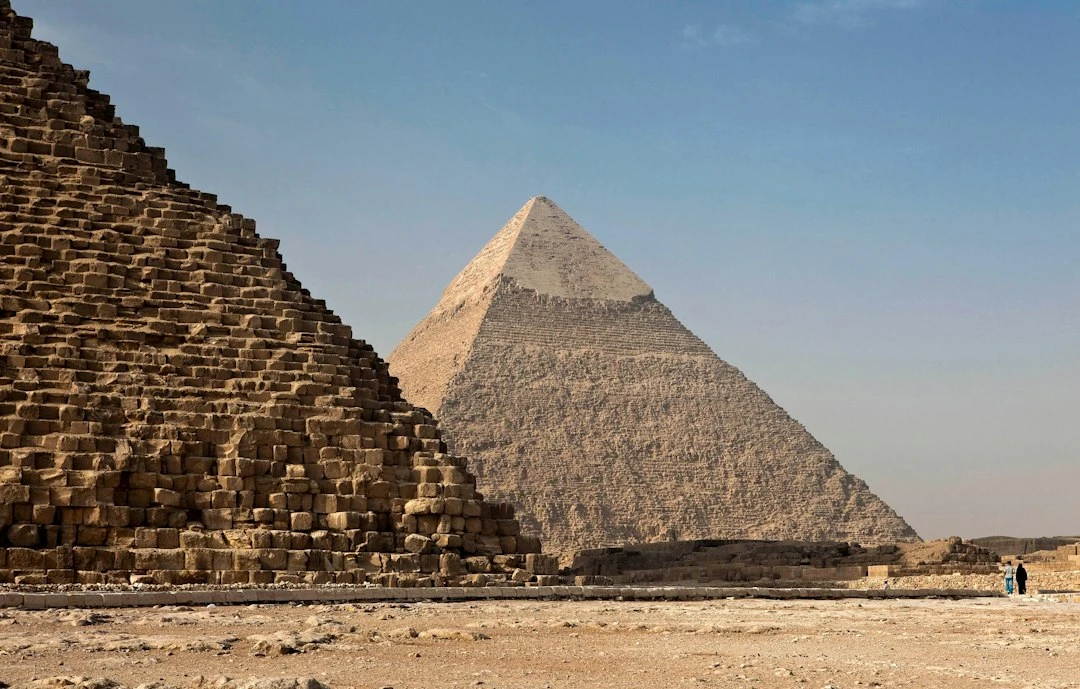
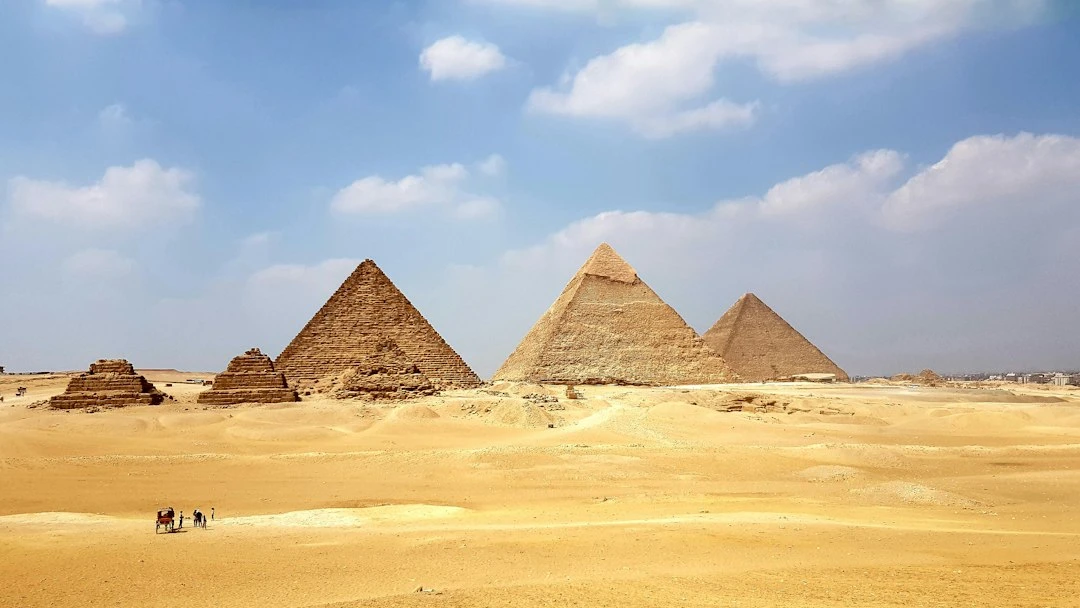
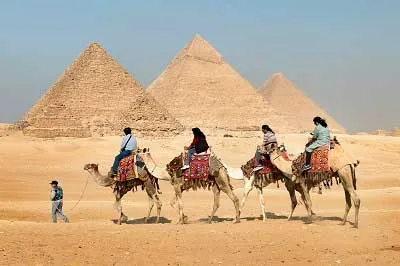
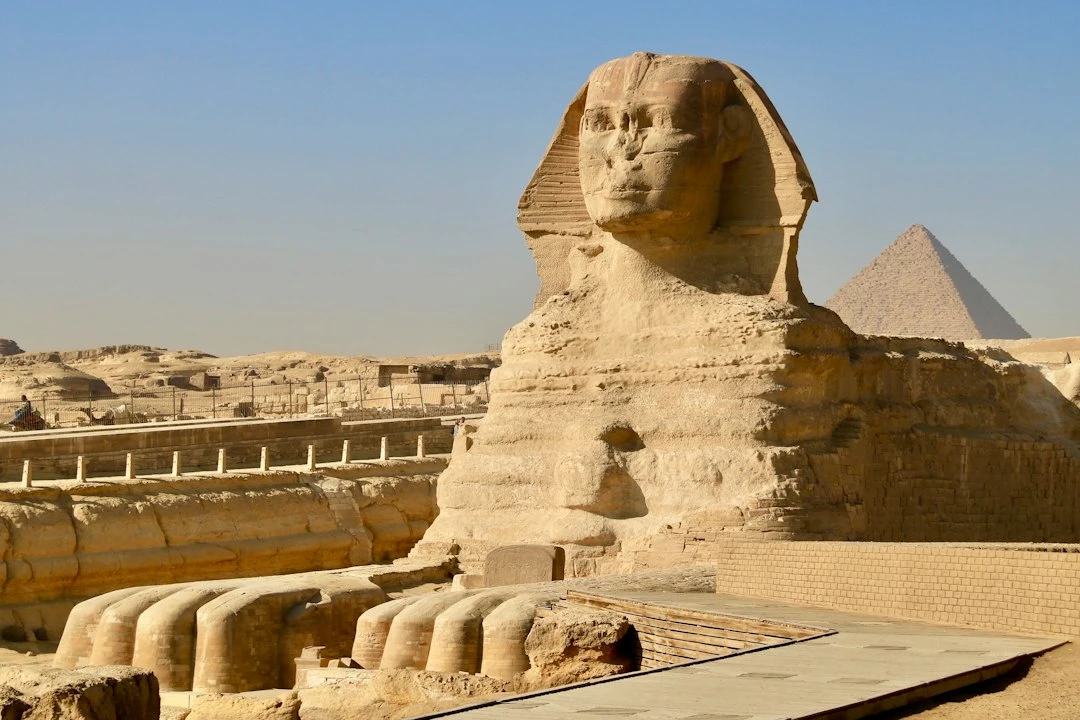
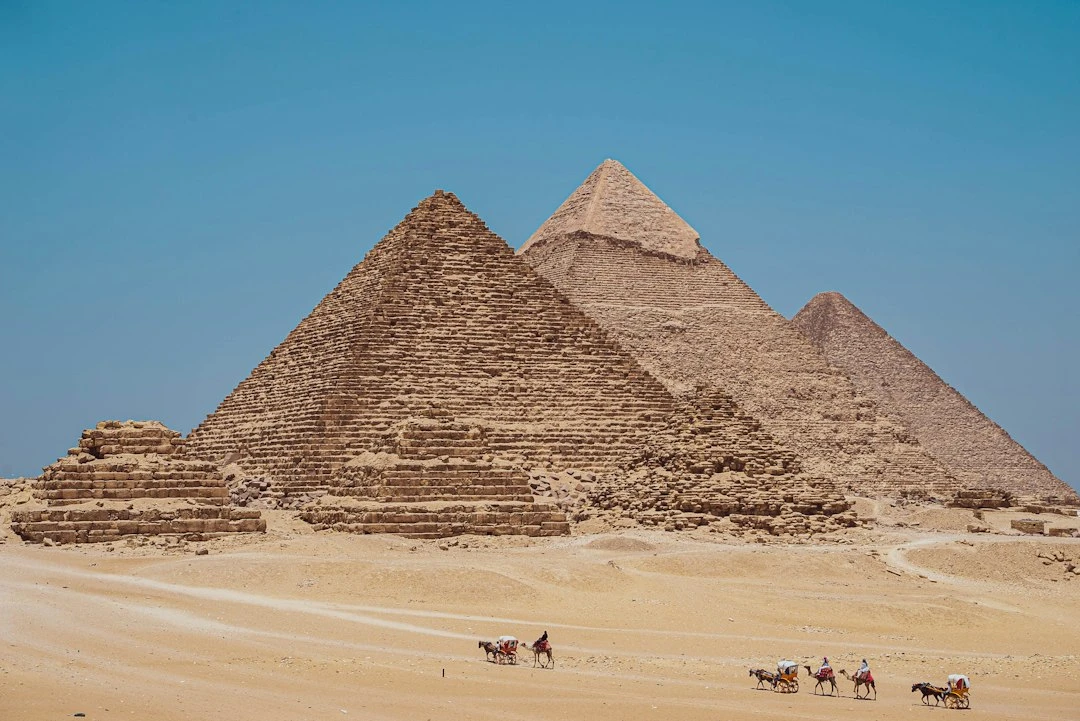
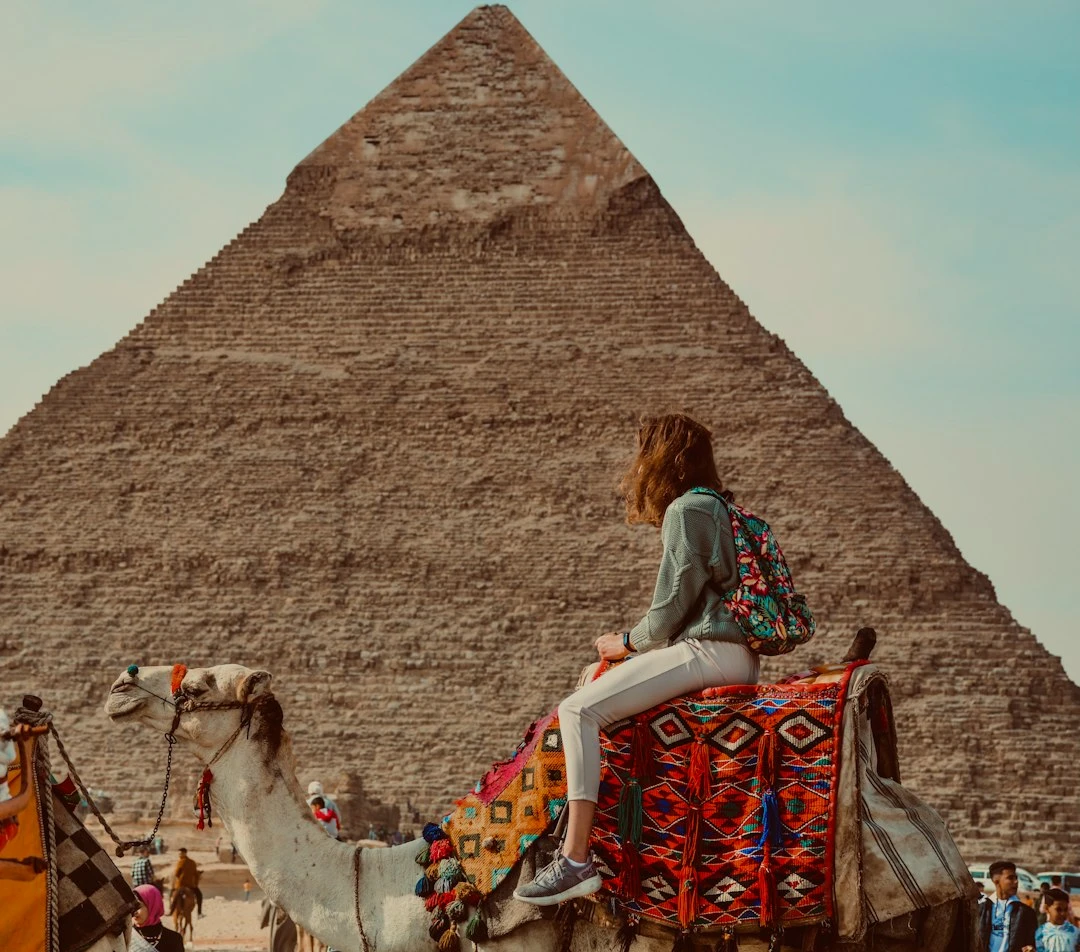
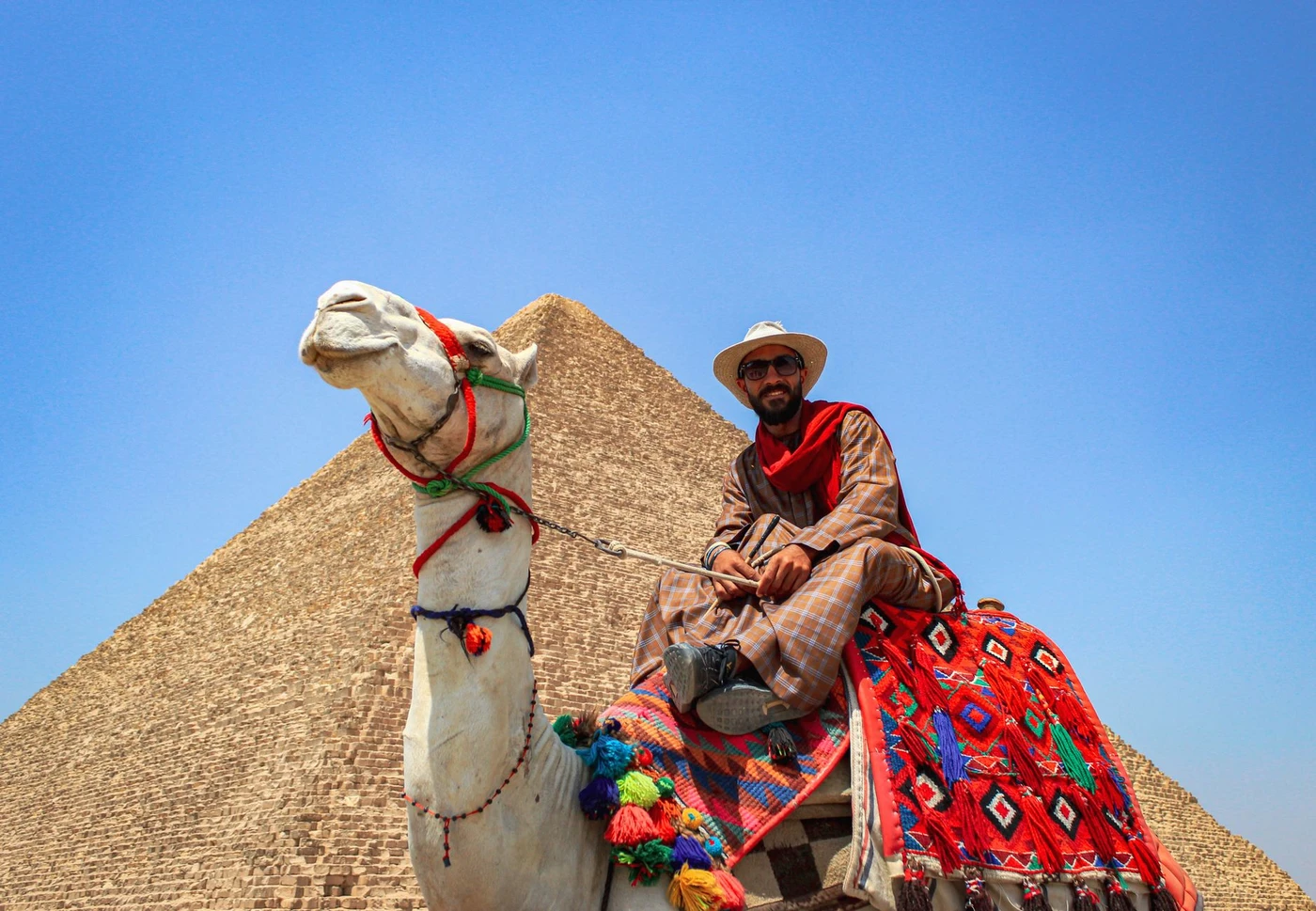
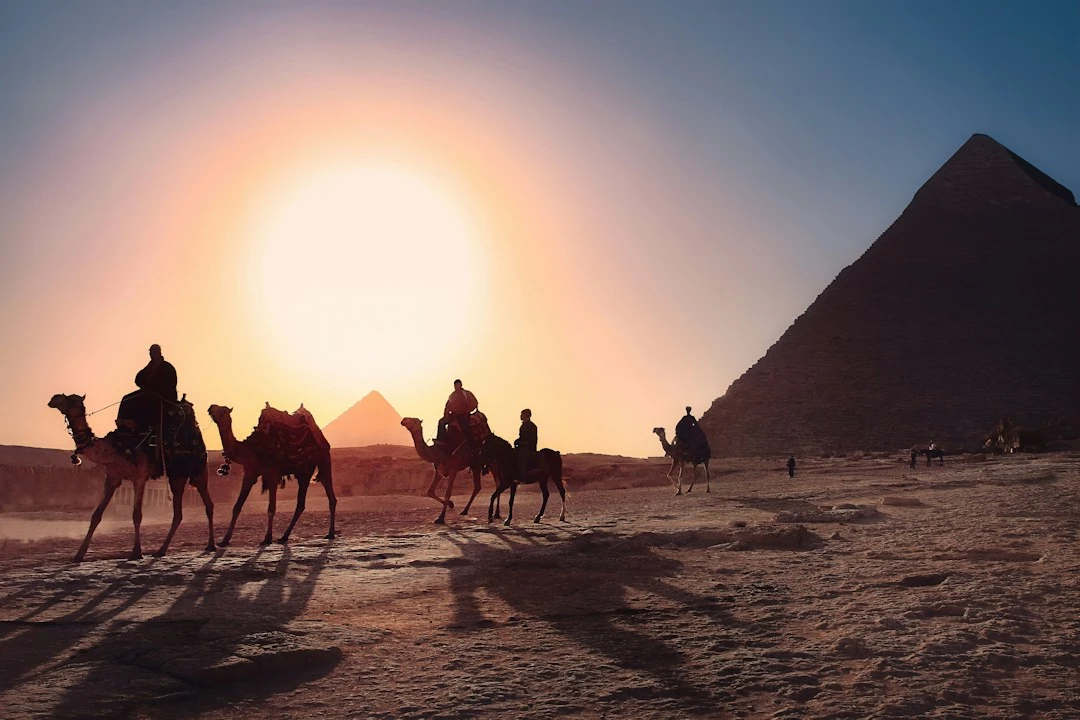
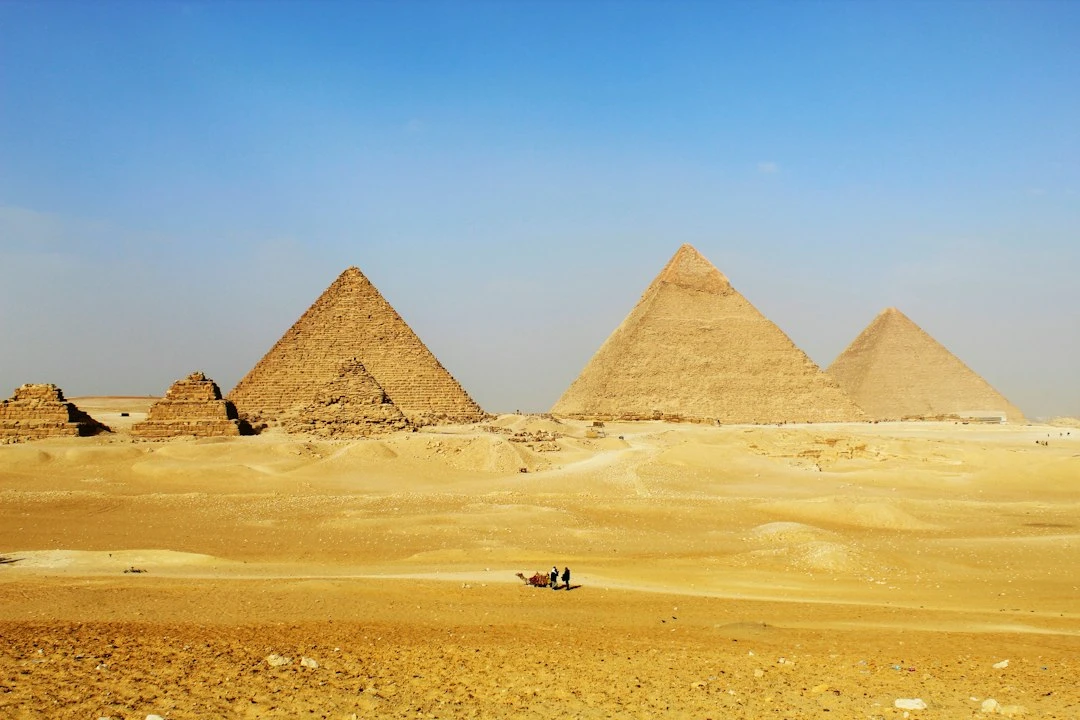
After breakfast, travel to Giza for a guided visit to the Great Pyramid, the pyramids of Khafre and Menkaure, and the Sphinx. Your Egyptologist explains how the plateau was planned as a royal cemetery and points out details that are easy to miss, including the remaining casing stones near Khafre’s summit and the Sphinx’s carved body.
There is time to walk between the main viewpoints and take photographs before continuing through the Giza area. The pace is steady rather than rushed, but the ground is uneven in places and the sun can feel strong, so comfortable shoes, water and a hat are useful.
Return to Cairo for a relaxed evening. This opening sightseeing day places one of Egypt’s best-known archaeological areas in context before the museums and historic quarters that follow.
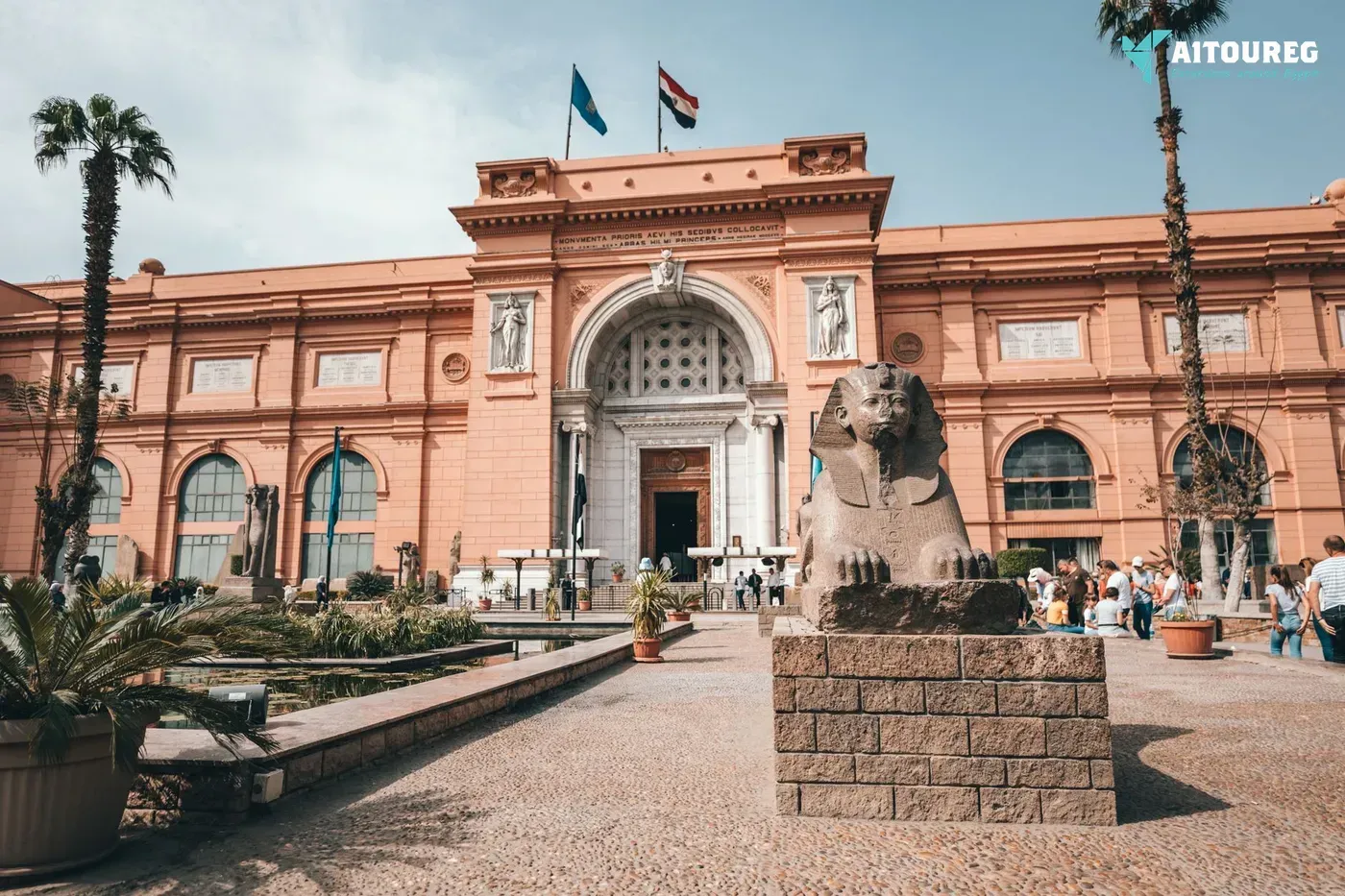
Begin with Cairo’s main antiquities collection, where the displays bring together objects from several periods of Egyptian history. Your guide helps you focus on the pieces most relevant to the places visited later, including royal sculpture, funerary objects and material from the New Kingdom.
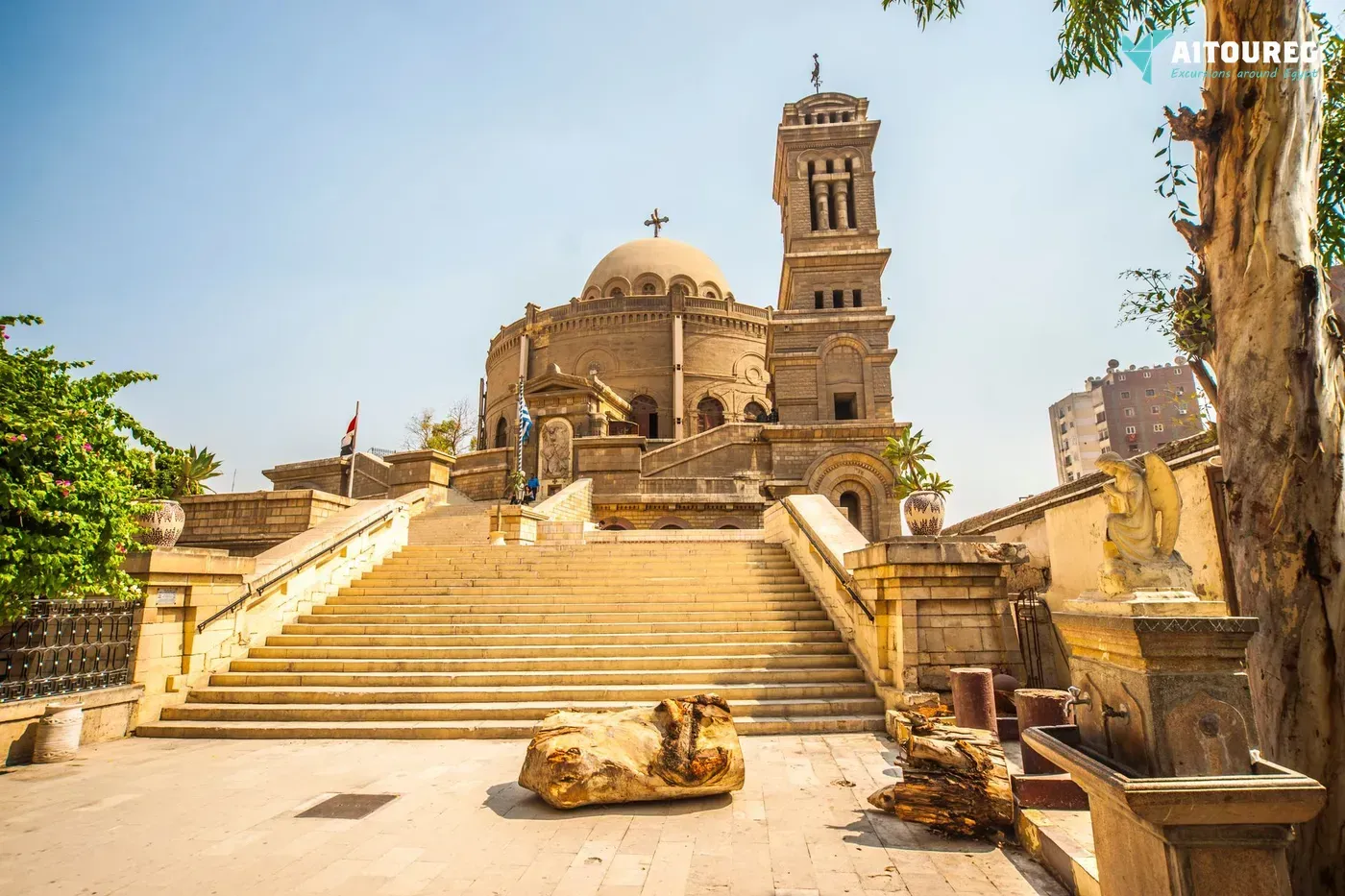
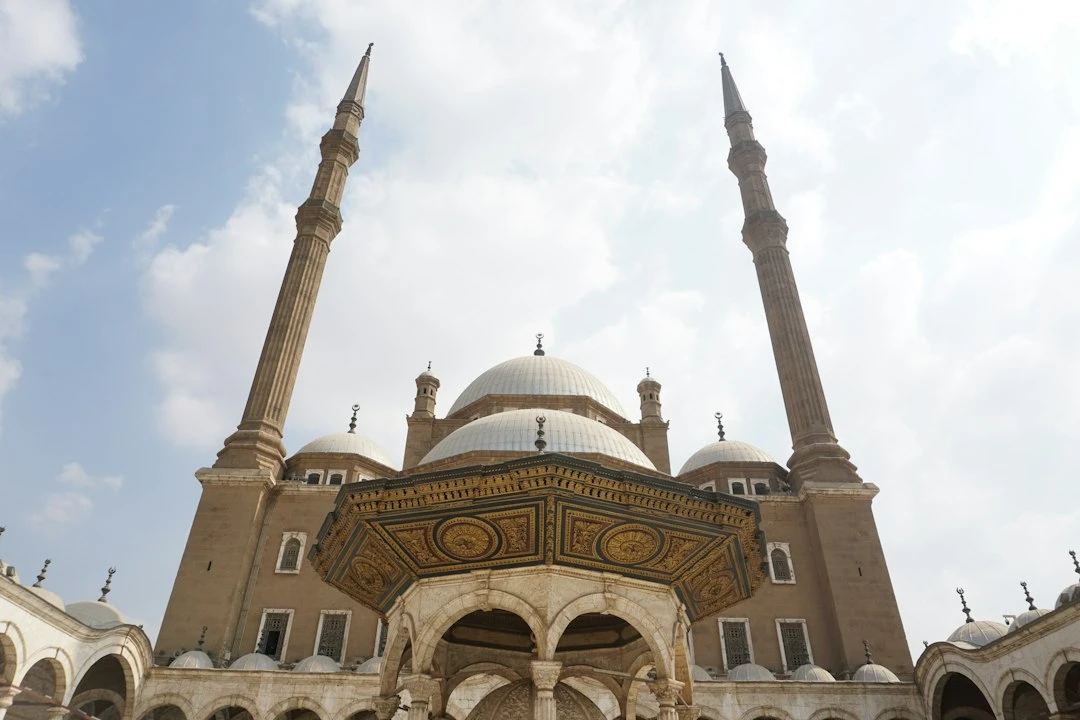
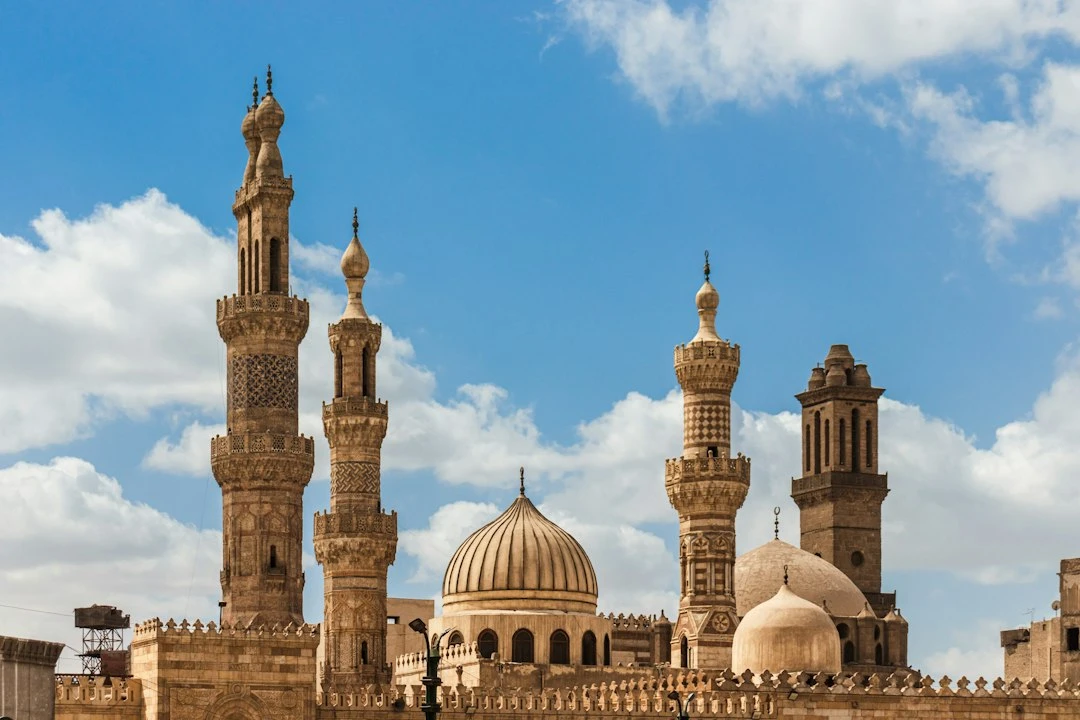
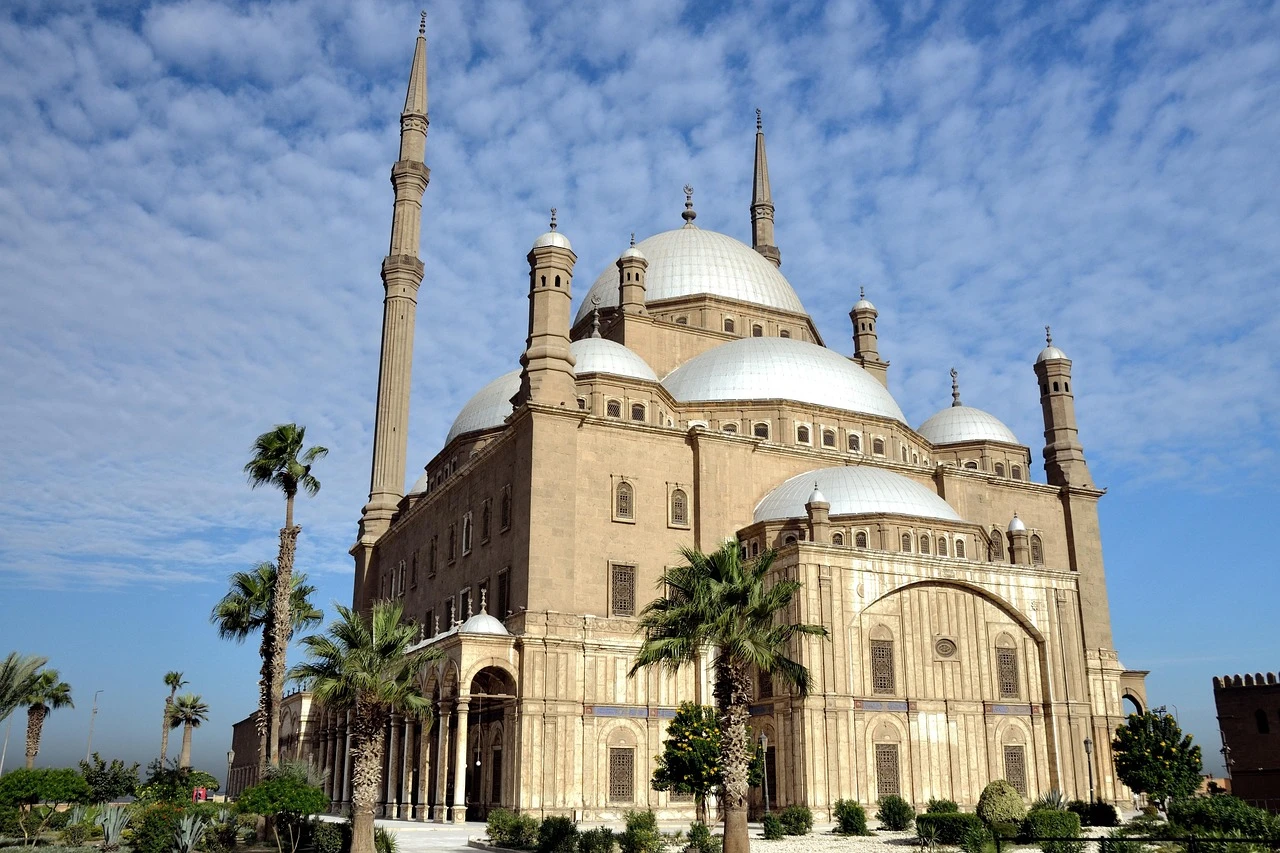
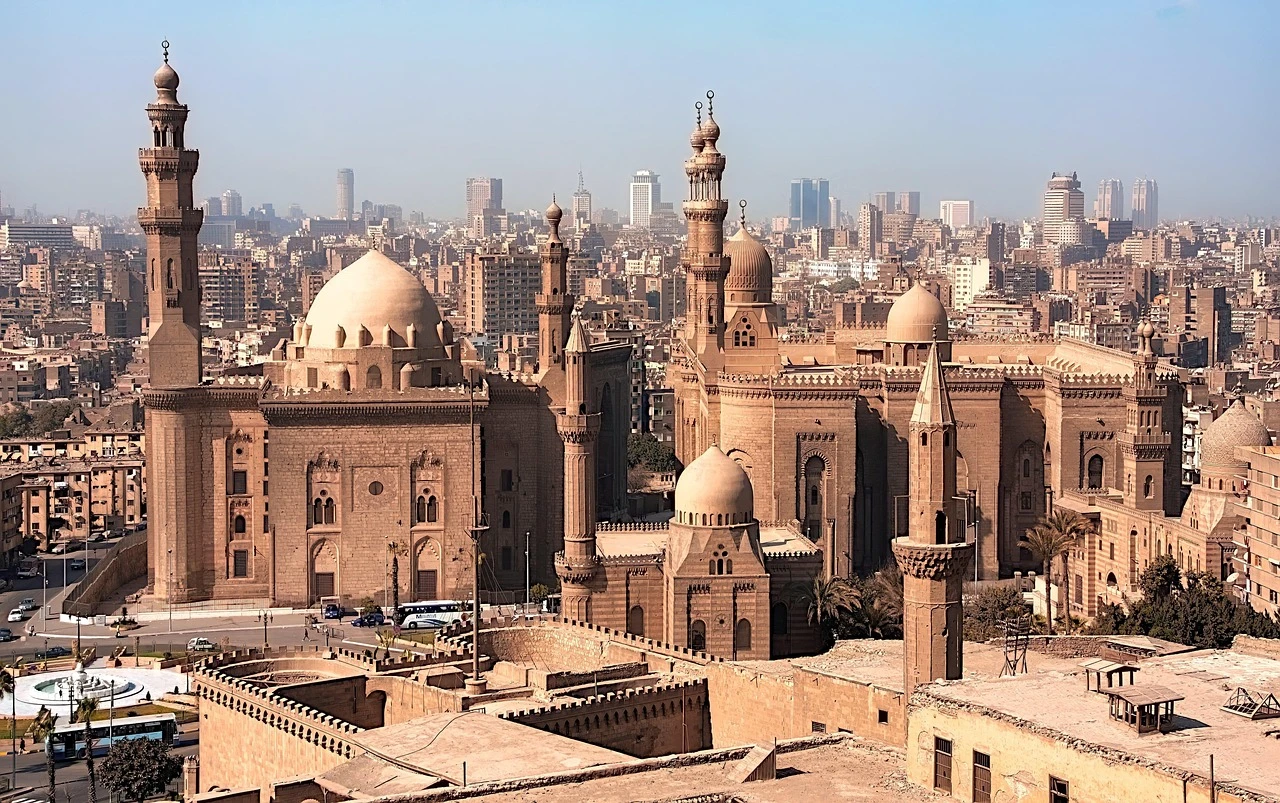
Continue into historic Cairo for a walk through its old lanes and religious monuments. The route may include the Citadel area and the nearby mosques, with time to see how medieval Cairo developed beyond the ancient capital at Giza. Modest clothing is appropriate when entering religious sites, and shoes may need to be removed in some interiors.
The day is arranged around Cairo’s main sights without trying to crowd every museum and monument into one visit. You return to the hotel to prepare for an early flight south to Aswan, the starting point for the Nile journey.
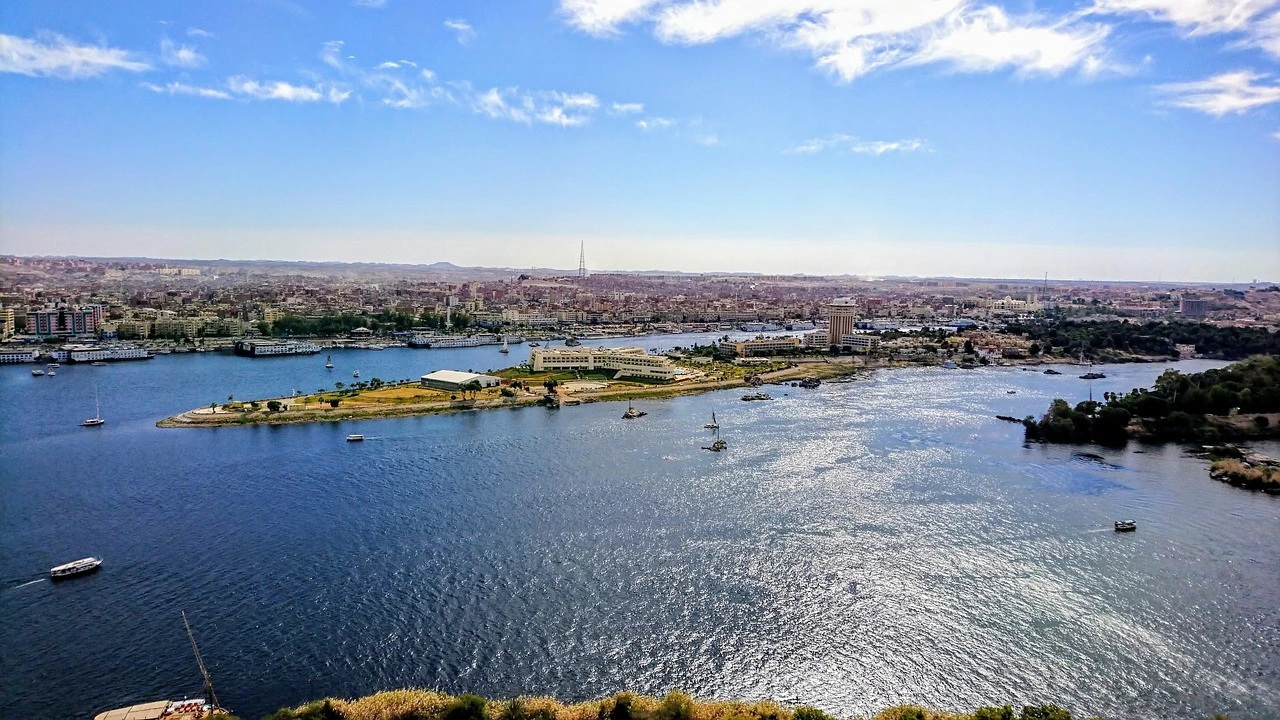
Fly from Cairo to Aswan and transfer to the cruise boat. After settling in, begin exploring Aswan with a boat ride to Philae Temple on Agilkia Island. The sanctuary was moved from its original island during the construction of the High Dam, and your guide explains the relocation while you walk through its courtyards, columns and reliefs.
Continue to the Aswan Dam, where the broad reservoir and engineering works show how modern Egypt reshaped the river’s seasonal flow. The visit is brief but gives useful context for the temples saved during the dam projects.
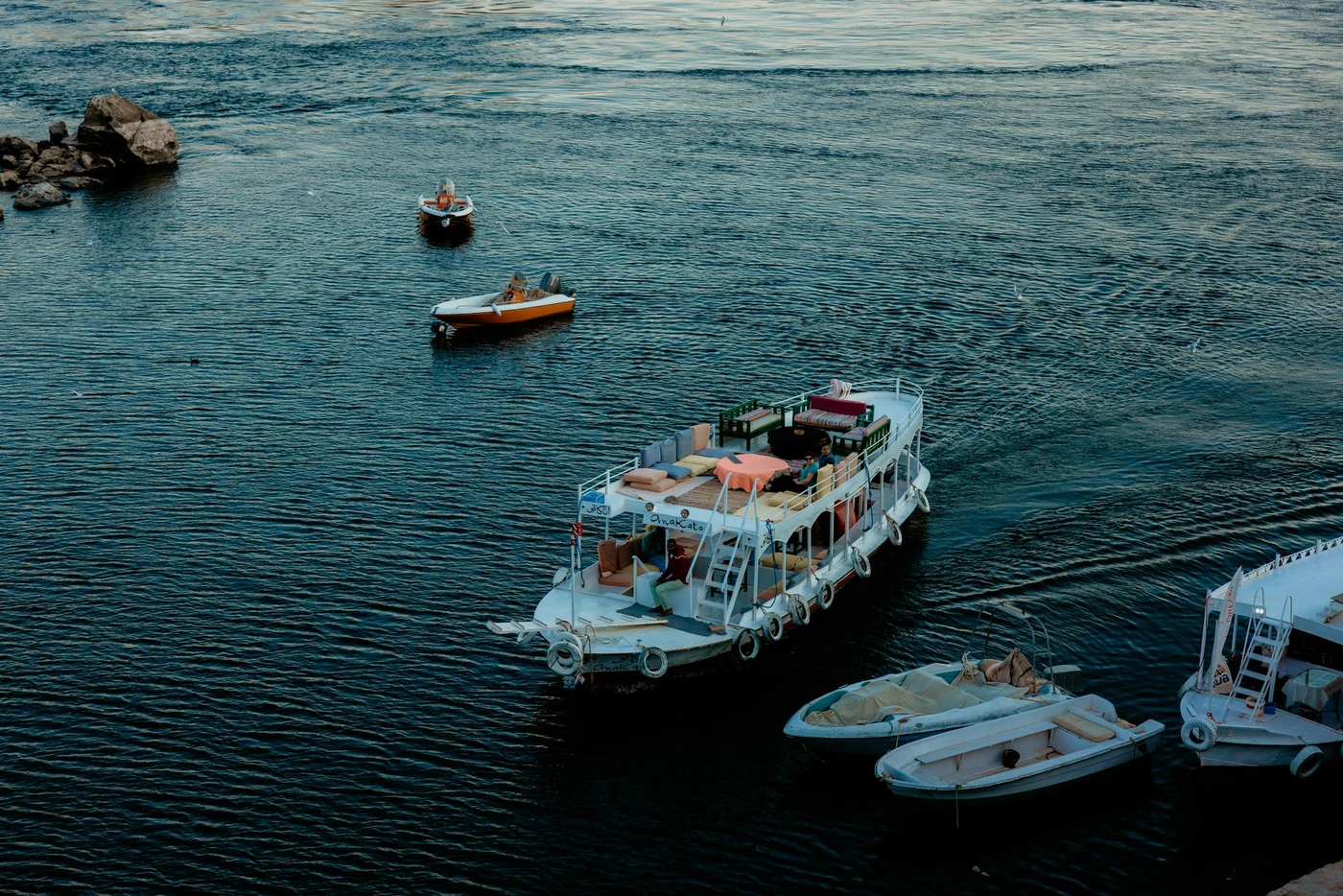
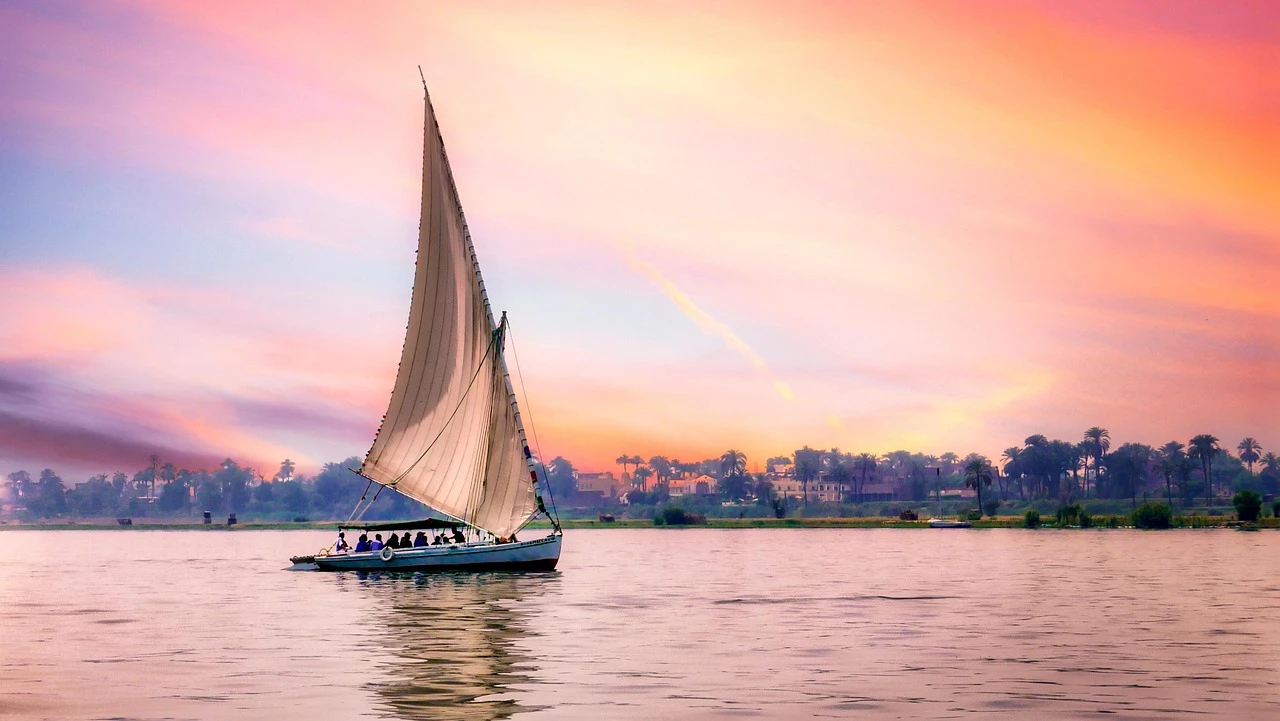
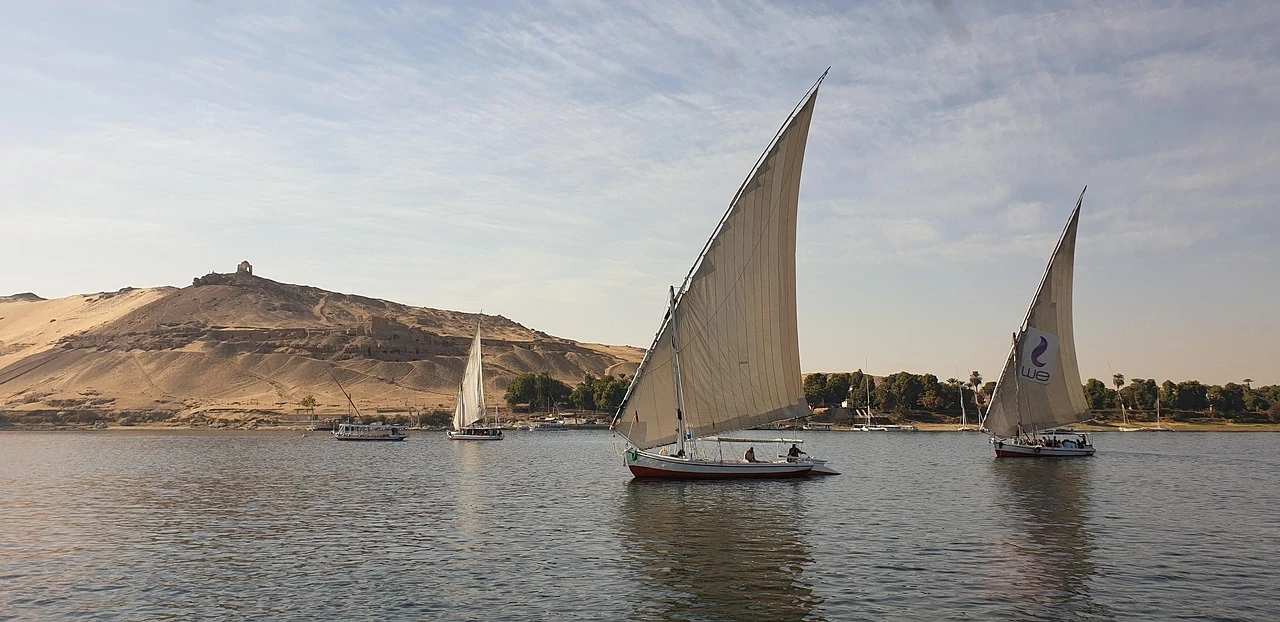
Return to the boat for lunch and time to unpack. The afternoon may be spent on deck as the cruise begins, with low granite islands and feluccas passing along the river. This is the first day of your 4-day Nile cruise, with meals and overnight accommodation on board according to the cruise arrangements.
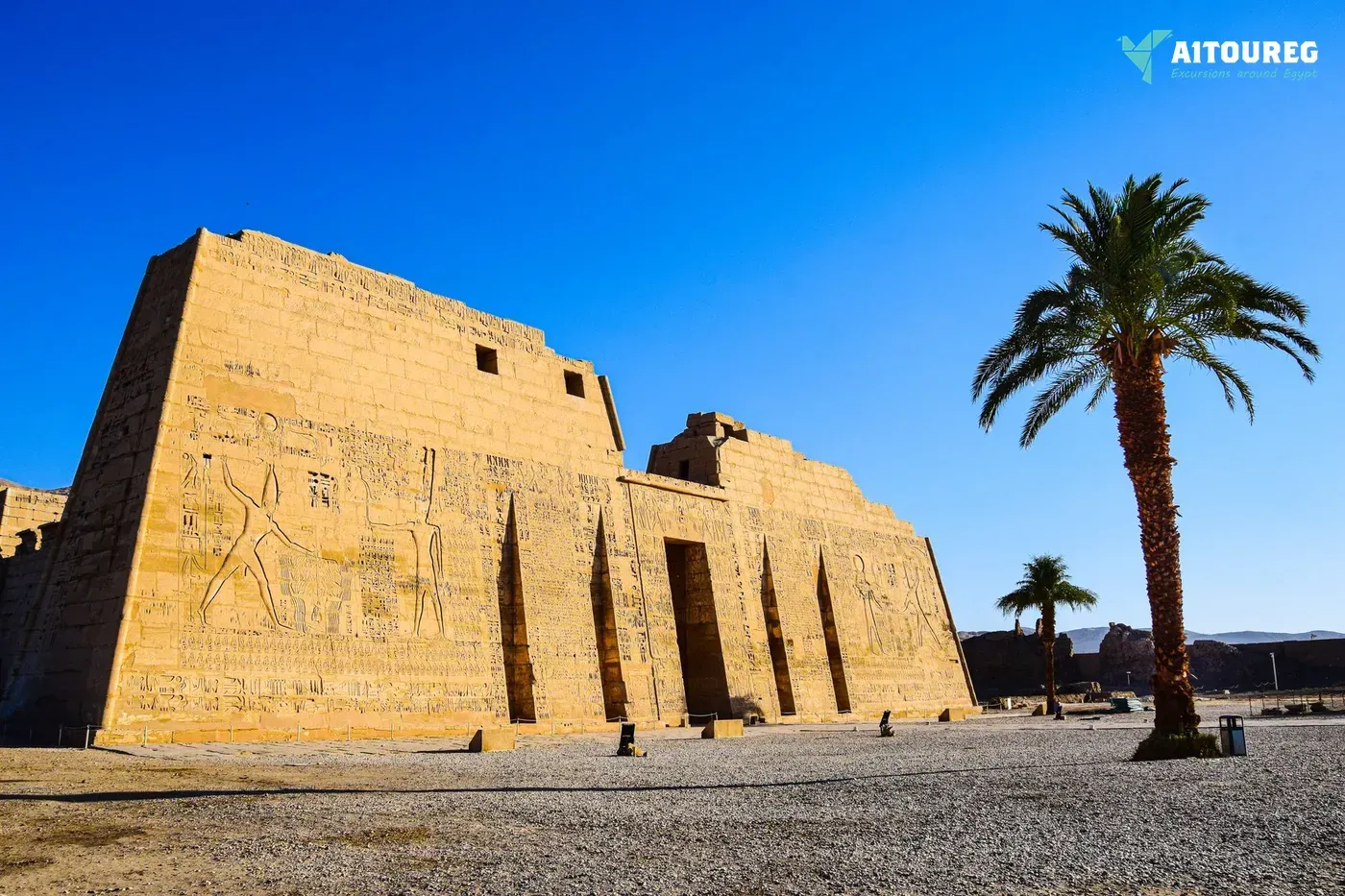
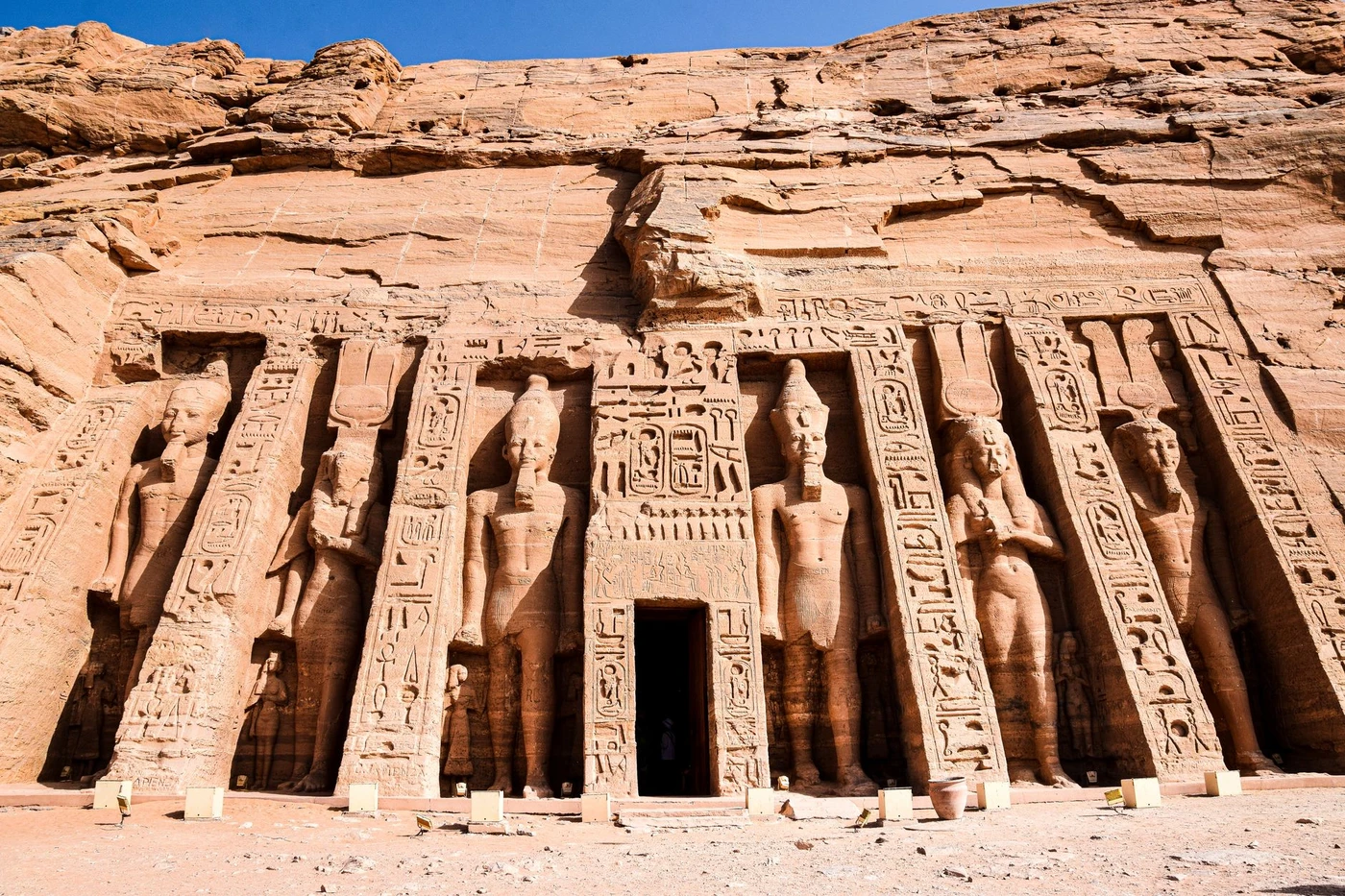
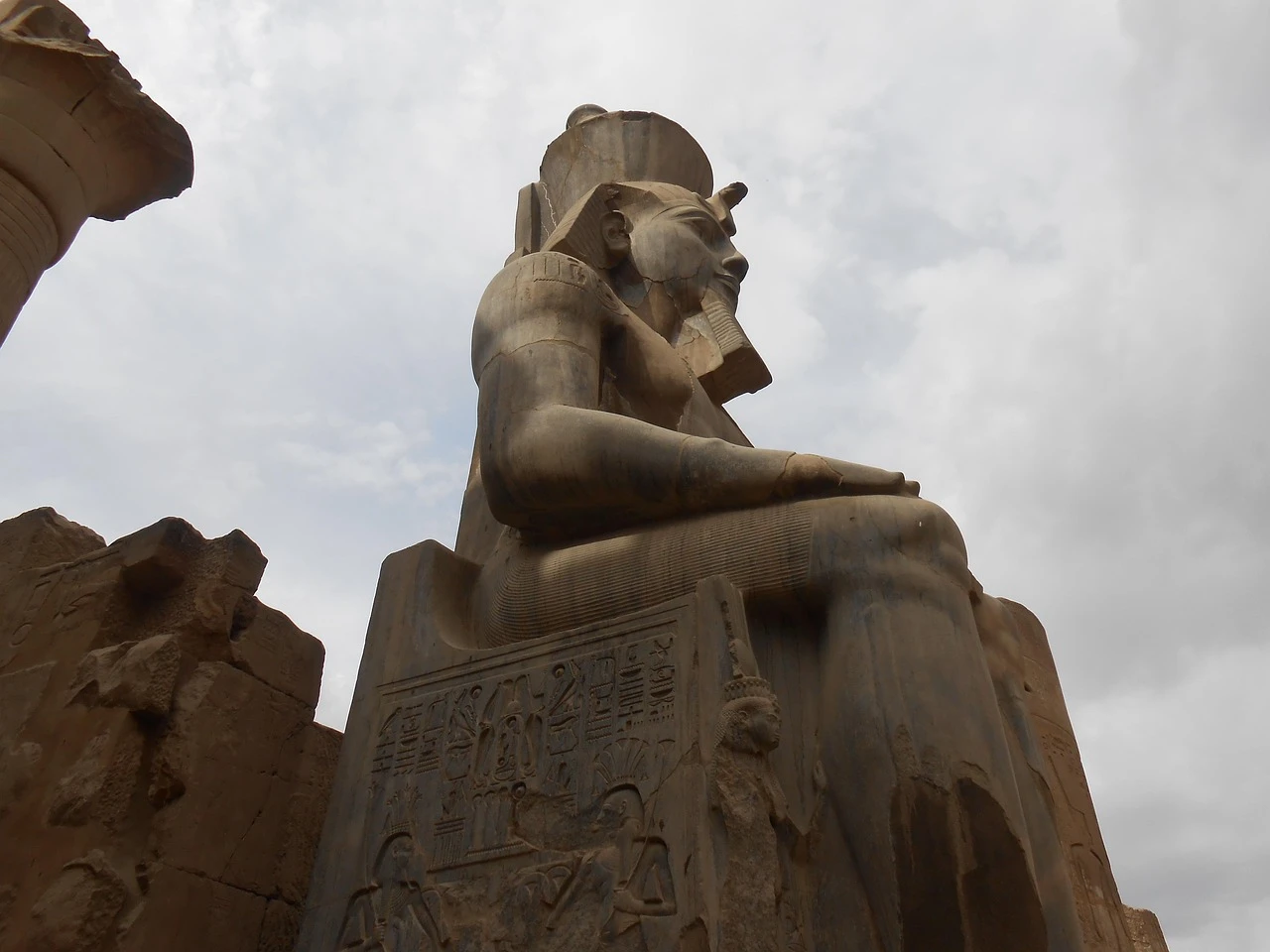
Leave Aswan early for the road journey to Abu Simbel. The drive crosses a wide desert landscape before reaching the two temples built by Ramesses II beside Lake Nasser. Inside the Great Temple, look for the colossal seated figures and the deep chambers decorated with scenes of royal victories and religious ceremonies.
The smaller temple belongs to Queen Nefertari and has carefully carved figures of the queen and the goddess Hathor. Your guide explains how both monuments were dismantled and rebuilt on higher ground when the reservoir was created. Allow time for the visit, photographs and a walk between the temple façades.
Return to Aswan and rejoin the cruise. The remainder of the day is quieter, with meals on board and the chance to watch the desert edge, villages and river traffic as the boat prepares to sail north.
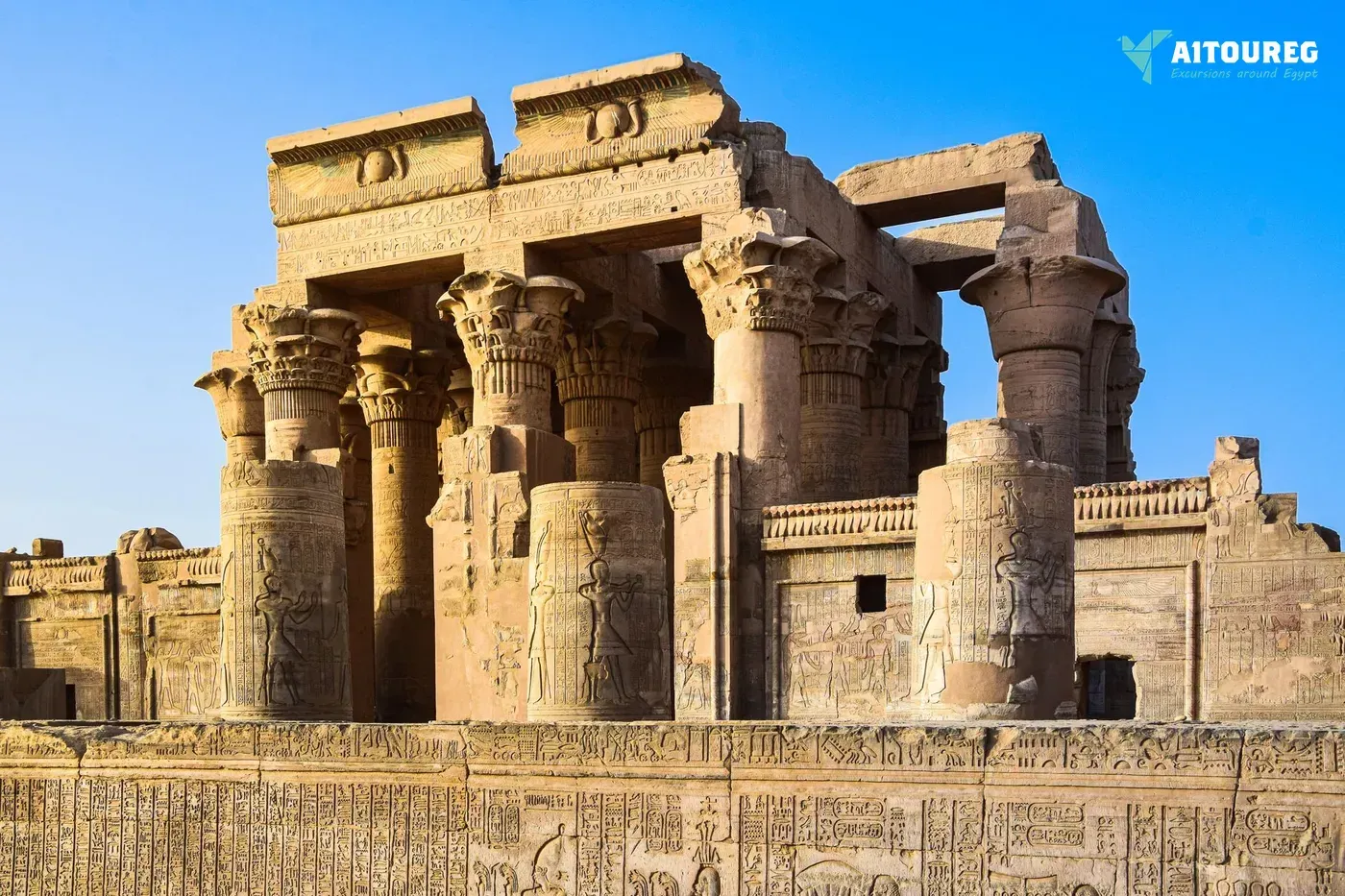
The boat sails north along the Nile, and the first temple visit is Kom Ombo. The riverside complex is dedicated to the crocodile god Sobek and the falcon-headed Horus, giving its plan a distinctive double layout. Your guide points out the two sanctuaries, the reliefs of medical instruments and the remains connected with the temple’s crocodile cult.
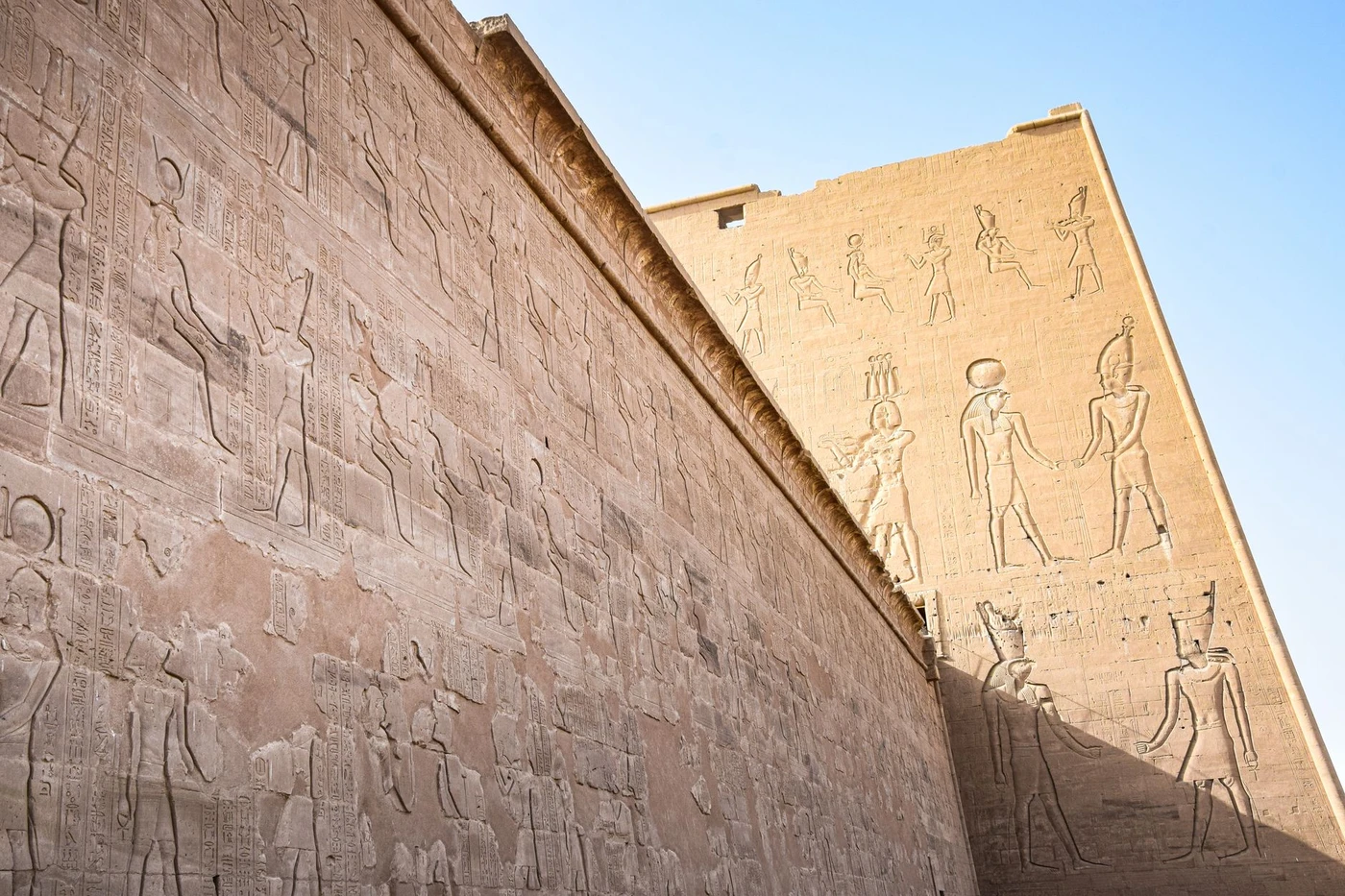
Continue by boat towards Edfu. Depending on the sailing schedule, the visit takes place by horse-drawn carriage or local transfer from the mooring area to the temple entrance. Edfu is one of Egypt’s best-preserved temples, and its towering gateway, enclosed courts and long inscriptions make the scale of Ptolemaic religious architecture easy to read.
Return to the cruise boat for lunch or an afternoon rest. Sailing time gives you a welcome pause between visits, while the guide can explain the myths and historical periods behind the monuments.
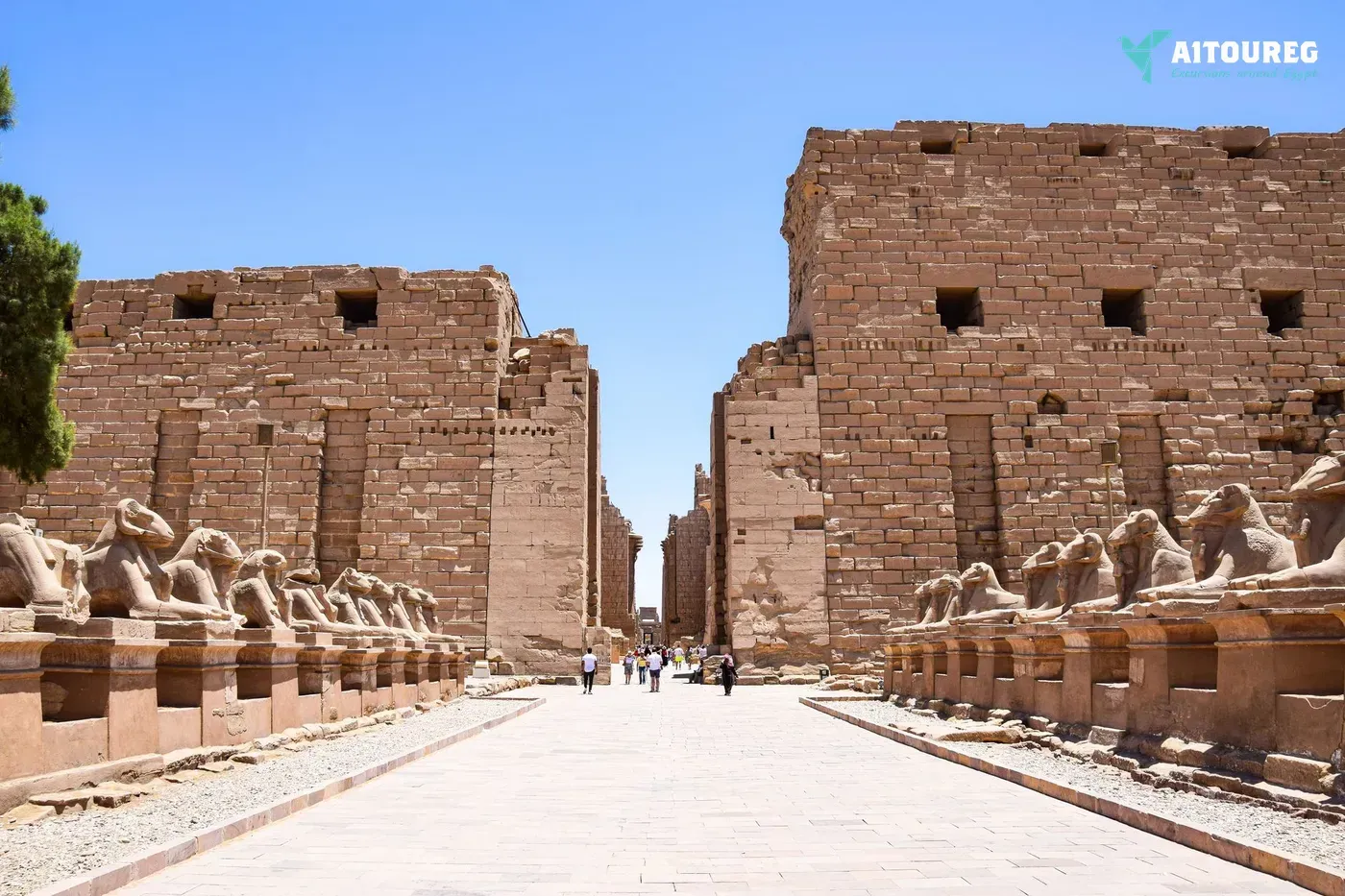
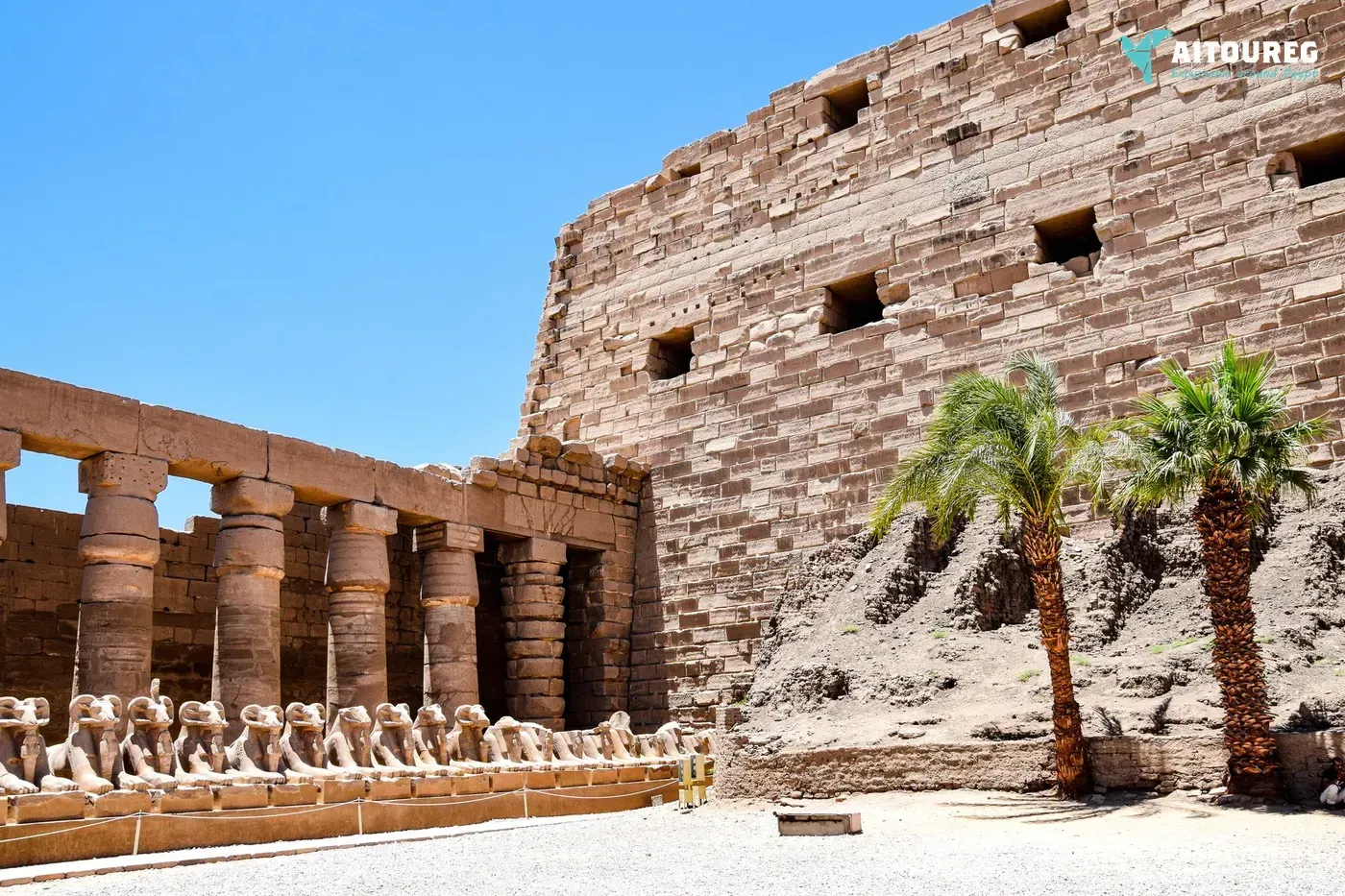
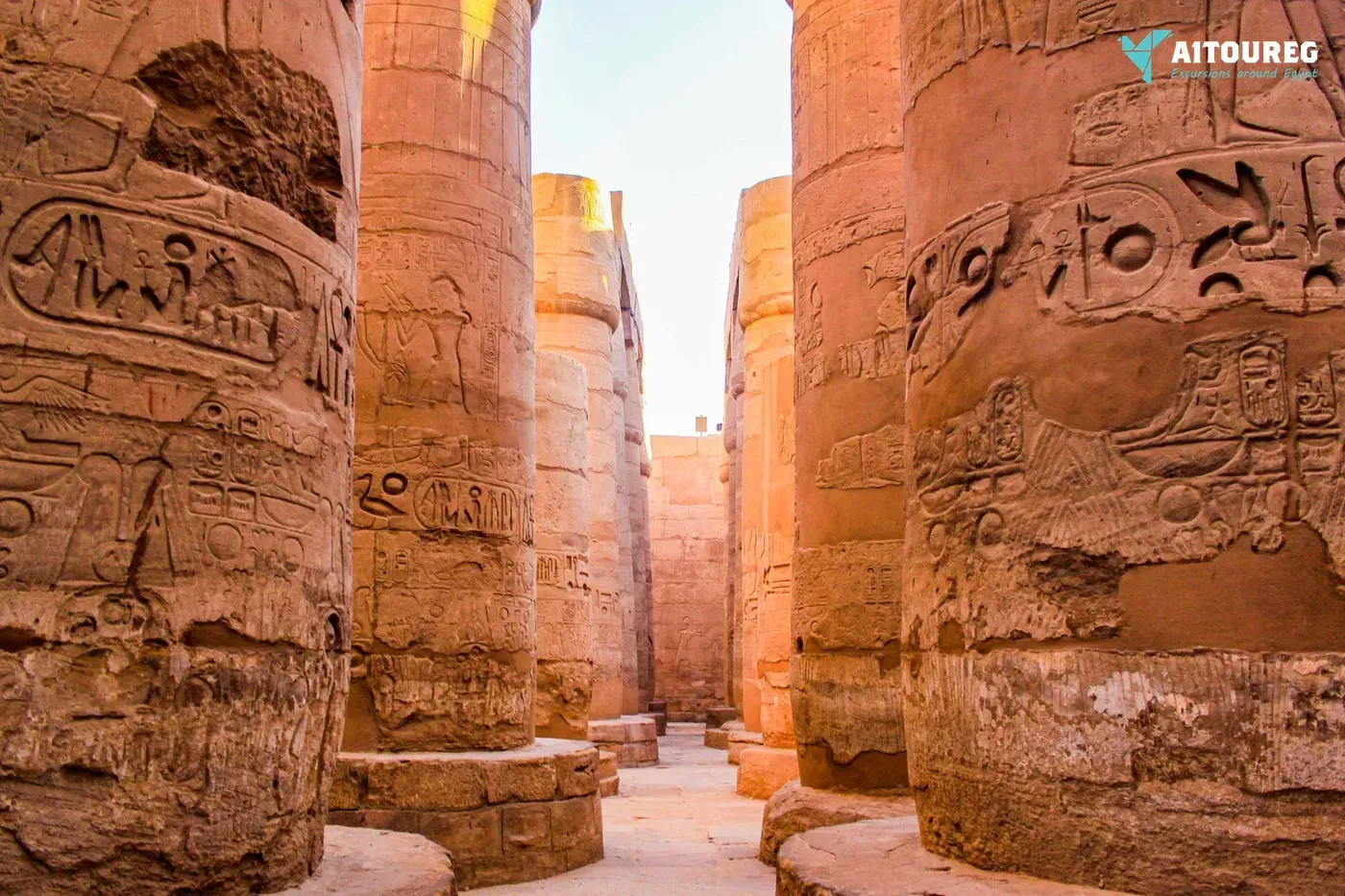
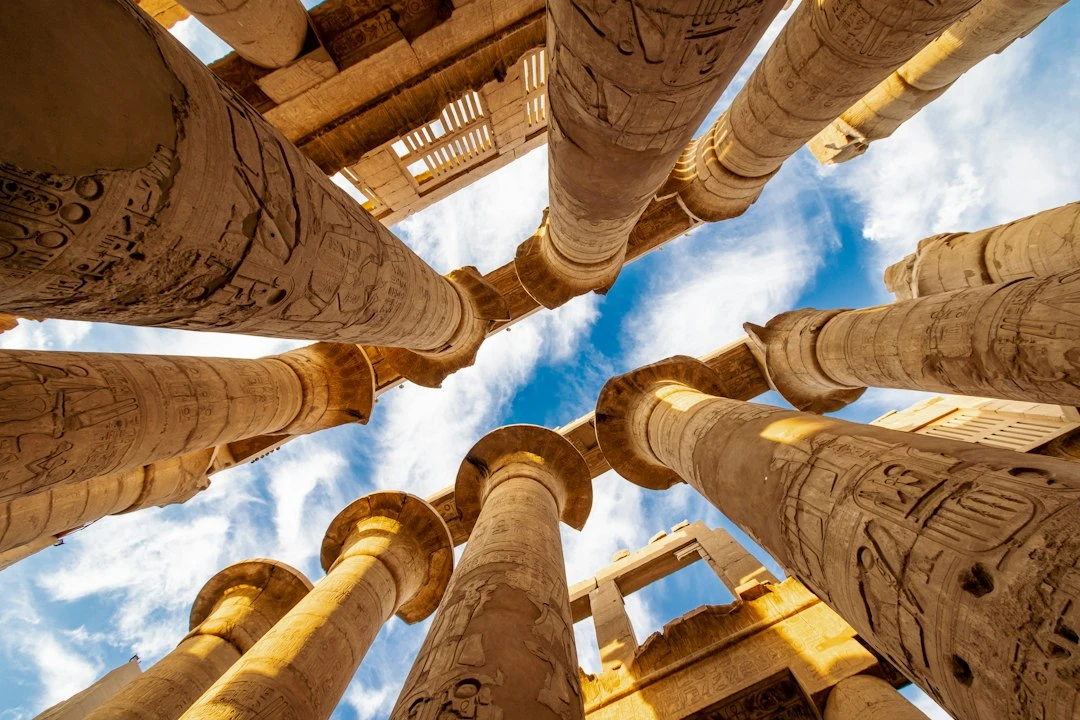
Arrive in Luxor and begin with Karnak Temple, the largest religious complex on the east bank. Walk through the Avenue of the Rams and the massive first pylon before entering the Great Hypostyle Hall, where rows of enormous columns carry carved and painted decoration. The complex was expanded by successive pharaohs, so the visit unfolds in layers rather than as one single building.
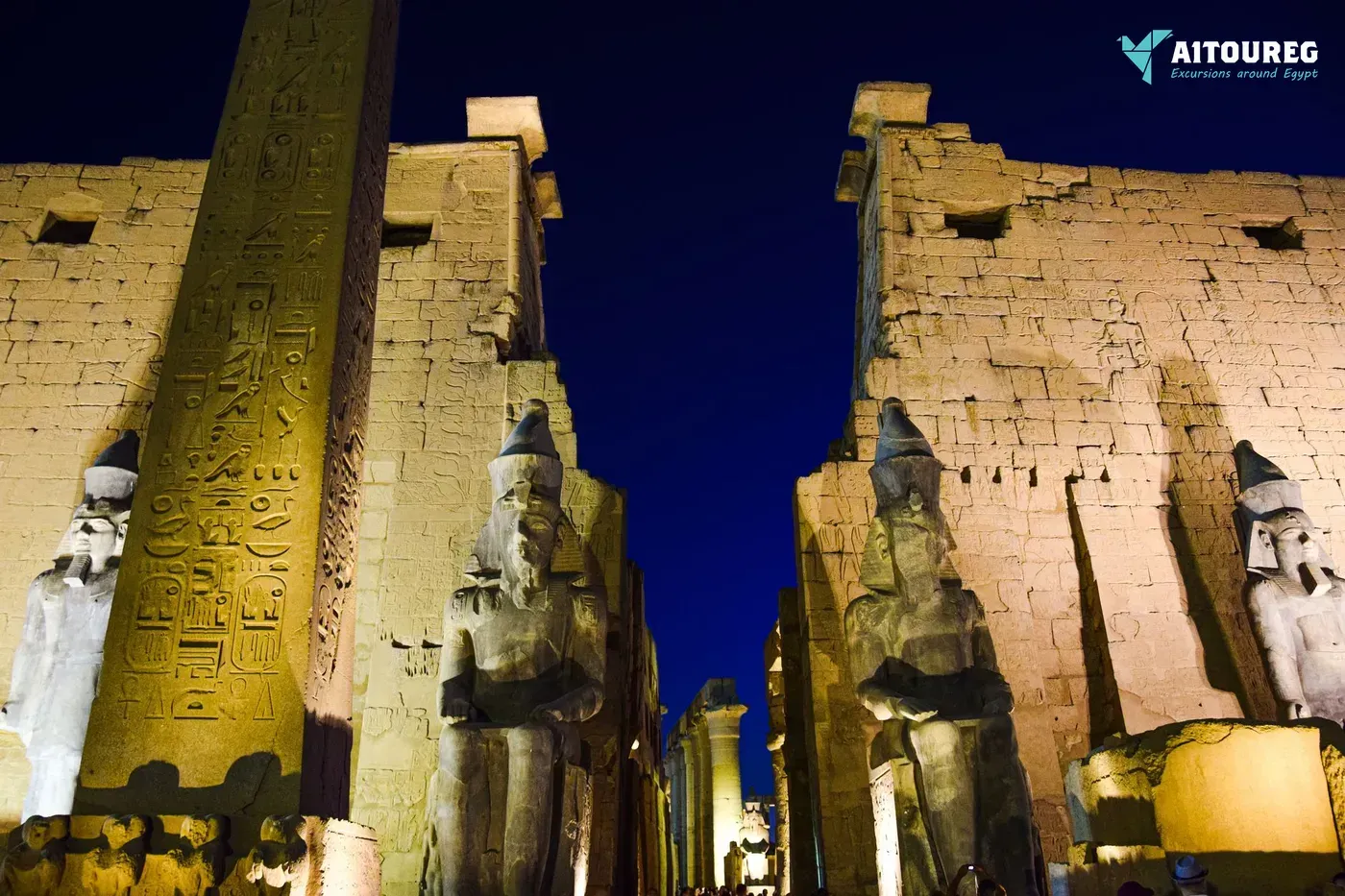
After time for lunch and a short rest, continue to Luxor Temple. Its entrance statues, obelisks and columned courts sit close to the modern city, and the changing light later in the day helps reveal details in the reliefs. Your guide links the temple to the ancient processions that connected it with Karnak.
Spend the night in Luxor after leaving the cruise boat. Keep your evening easy; the following morning focuses on the west bank and starts with several important tombs and temples.
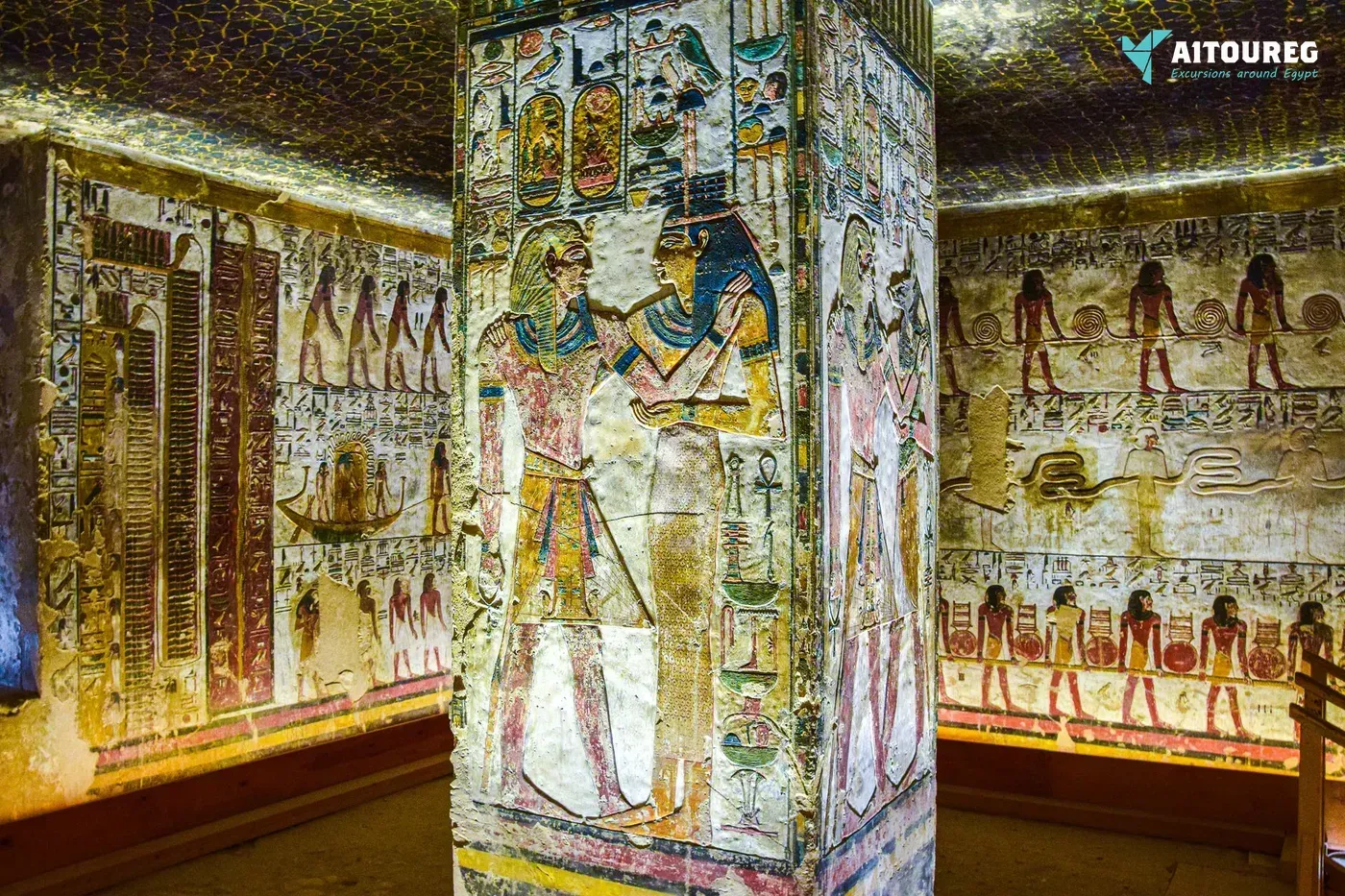
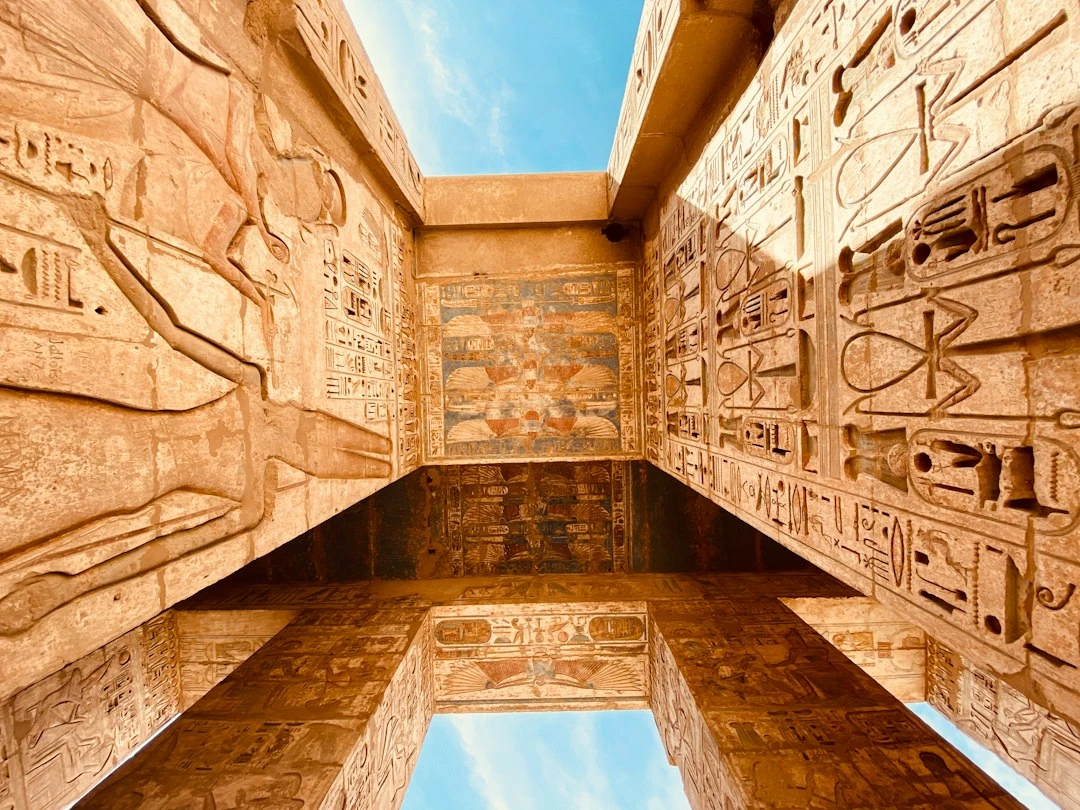
Cross the Nile early to the west bank and enter the Valley of the Kings. The ticket normally allows access to a selection of open tombs, while special tombs may require an additional arrangement. Inside, painted corridors descend into the rock, with scenes from the journey to the afterlife still visible on many walls.
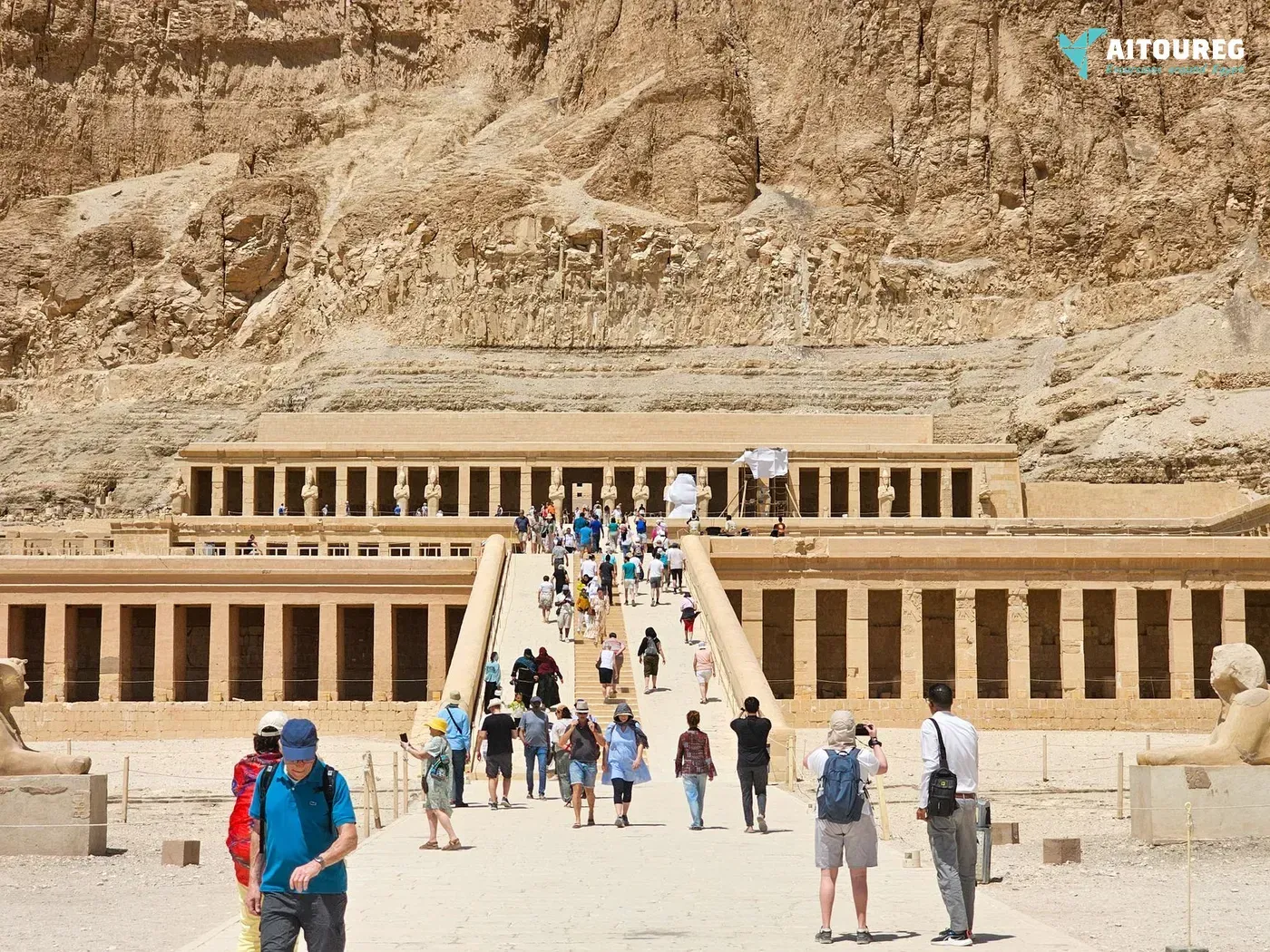
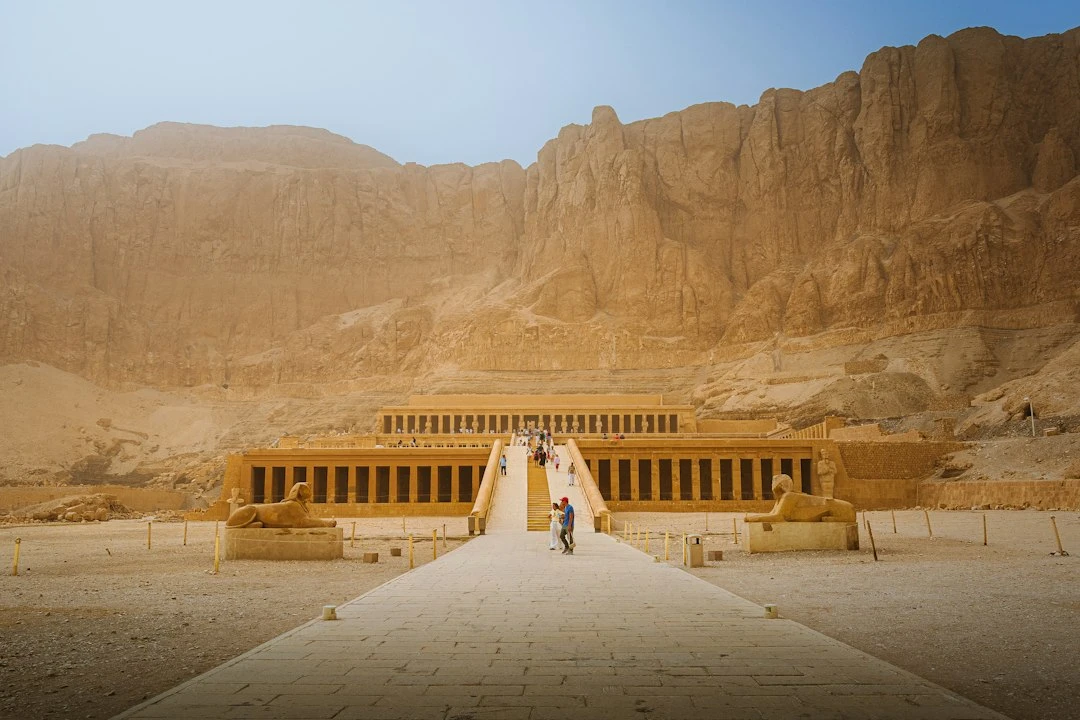
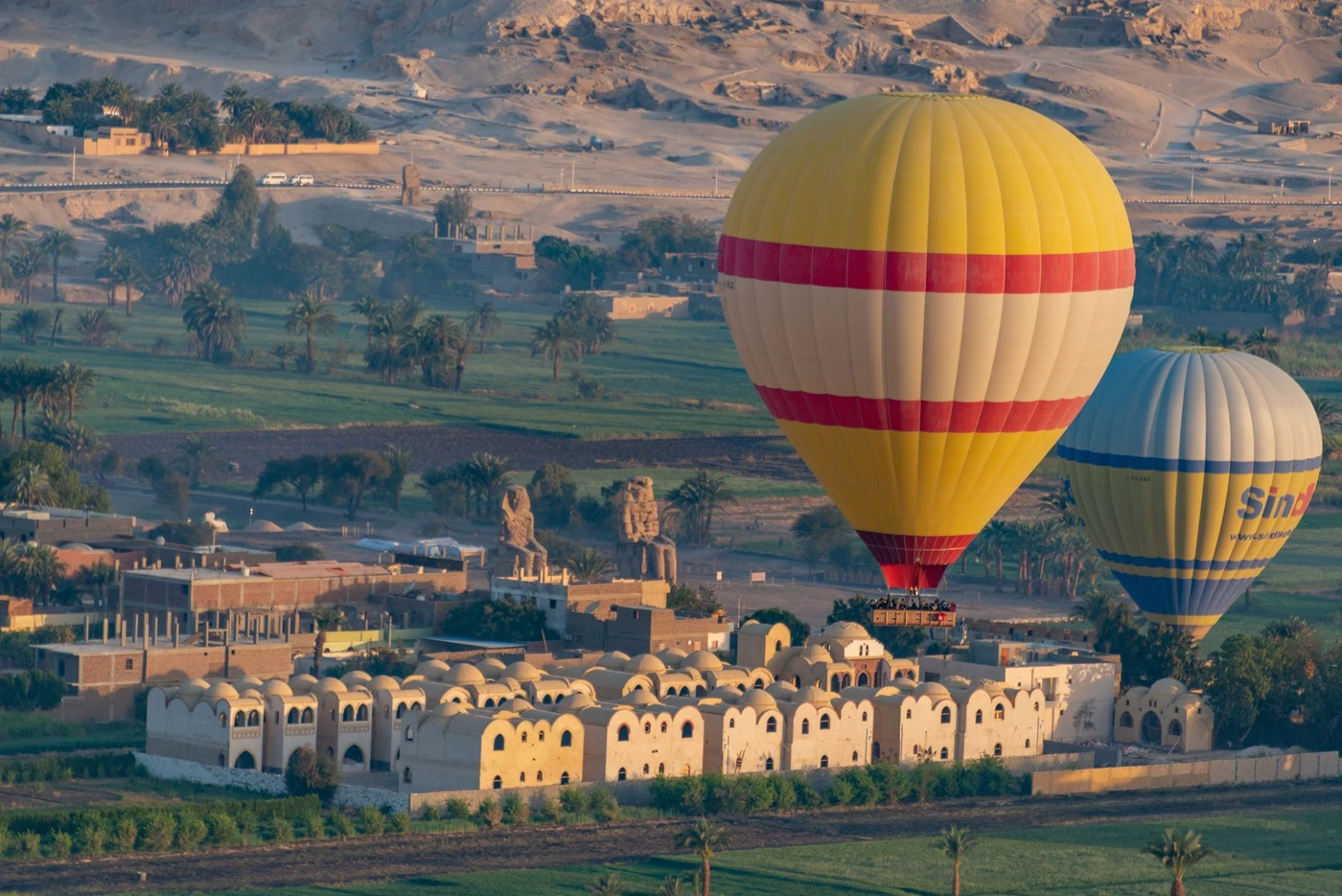
Continue to Queen Hatshepsut Temple at Deir el-Bahari. Its broad terraces rise against the cliffs, and the reliefs explain the queen’s lineage, her trading expedition to Punt and her claim to kingship. Finish with the Colossi of Memnon, two large seated figures beside the road through the west bank.
The route involves sun, steps and uneven surfaces, so bring water and wear shoes with a firm grip. Return to your Luxor hotel after the visits, with the afternoon free for rest or a quiet walk along the river.
After breakfast, transfer to Luxor airport for the flight back to Cairo. The flight is much more practical than attempting the journey by road, leaving the afternoon available for a slower change of pace after the temple visits.
On arrival, our team arranges the transfer to your Cairo hotel. You can rest, organise your luggage for the desert section and keep any essentials accessible for the long road journey to Siwa. Desert travel is more comfortable with light layers, sun protection, a refillable water bottle and sturdy walking shoes.
This is a useful transition day rather than another packed sightseeing day. Your guide confirms the next road arrangements and explains that the route to Siwa passes through the north coast and El Alamein before reaching the oasis in the Western Desert.
Leave Cairo by road for Siwa Oasis, travelling west through the changing landscape of the Nile Delta and the northern desert. The journey is long, so we plan comfort stops along the way and keep the sightseeing focused on the route rather than adding unnecessary detours.
Stop at the El Alamein Tombs, the Commonwealth and other military cemeteries that commemorate the campaigns fought in this area during the Second World War. The grounds are quiet and carefully maintained, and the visit gives a clear sense of why this coastal location was strategically important.
Continue inland to Siwa, where palms, salt lakes and low desert horizons replace the coast. Check in on arrival and settle into the slower rhythm of the oasis. Dinner and the evening are free, with the next day reserved for Siwa’s historic sites and desert scenery.
Explore the old settlement and the Fortress at Shali, built from salt-rich mud and once protected by its elevated position. Walking through the weathered lanes shows how the oasis community adapted its buildings to local materials. Continue to the Temple of the Oracle at Aghurmi, associated with the oracle consulted by Alexander the Great.
Visit Gebel Al Mawta, a limestone hill containing decorated tombs cut into the slopes. Your guide explains the burial customs represented in the chambers, while the hilltop gives wide views over Siwa’s palms and scattered salt pools.
Later, travel to Cleopatra’s Bath, a natural stone pool fed by a spring. Time here depends on local conditions and the group’s pace. You can then see more of the oasis landscape before returning to your accommodation. The evening is calm, with the Great Sand Sea adventure scheduled for the following day.
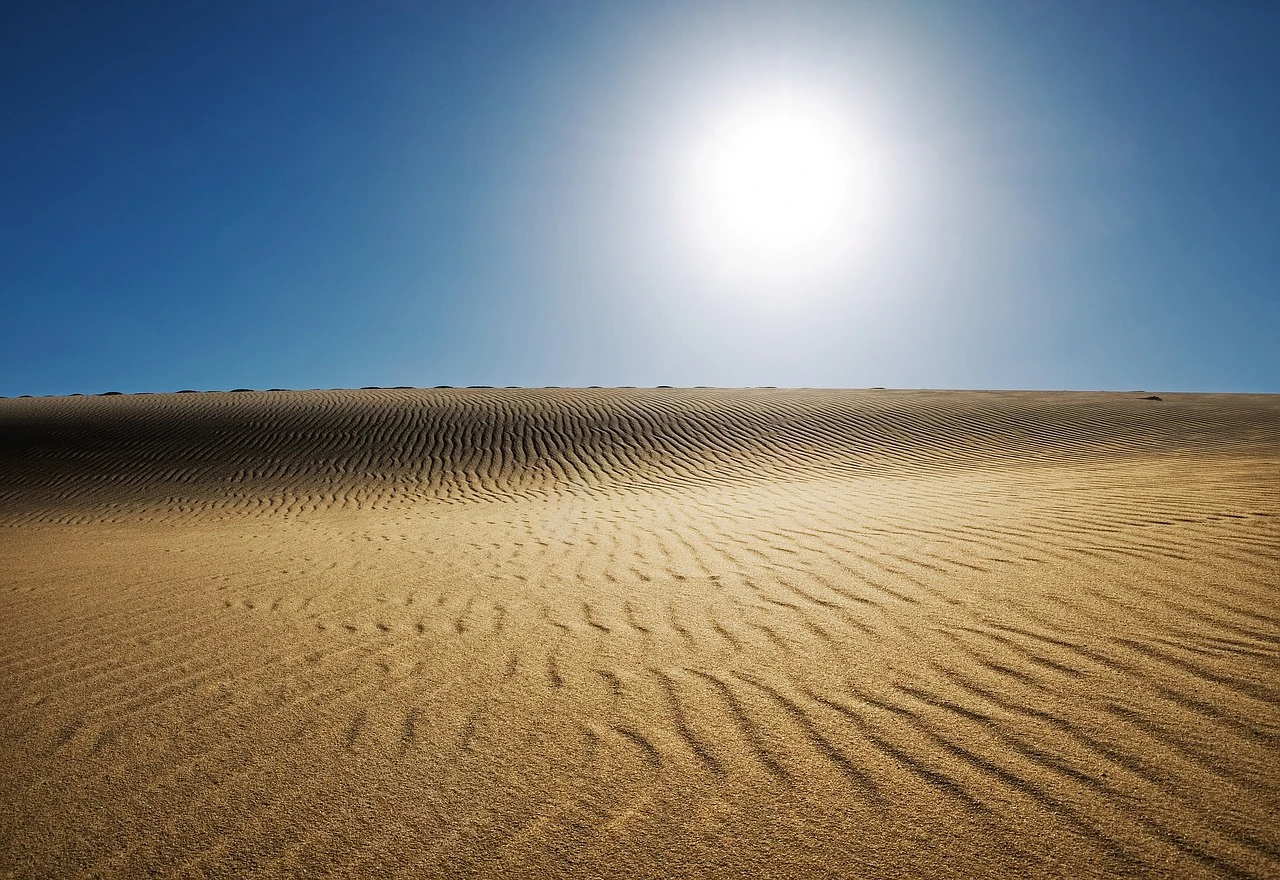
Start with a 4x4 drive into the Great Sand Sea, where broad dunes replace the cultivated palms of Siwa. The route is an active desert outing, with stretches across soft sand and pauses at viewpoints. This is where you make an adventure trip in the true sense: expect a bumpy ride, open horizons and a schedule shaped by the road and local conditions.
Stop to discover the hot springs used by local communities, allowing time to relax and rinse away the dust if the spring and access arrangements permit. Your driver chooses suitable stopping points, and you should carry sun protection, water and a change of clothes if you plan to enter the water.
After the desert outing, begin the long return drive to Cairo. The journey takes much of the day, so the evening is reserved for arrival, a meal and rest rather than additional sightseeing.
Leave Cairo for Bahariya Oasis by road, travelling across the Western Desert. After arriving, take a short break before continuing by 4x4 towards the desert formations. The route includes the Black Mountain, where dark volcanic-looking rock contrasts with the pale desert, and the Crystal Mountain, a small ridge scattered with quartz crystals.
Continue through the Valley of Agabat, known for its pale limestone shapes and open sandy floor. The driver stops at suitable viewpoints, while your guide explains how wind and erosion have shaped the formations. Conditions underfoot vary, so closed shoes are more practical than sandals during the walks.
As evening approaches, reach the White Desert and set up the desert camp. One night in the White Desert means a simple outdoor experience, with dinner prepared at camp and a clear change from hotel accommodation. Bring a warm layer because desert temperatures can fall after sunset.
Wake in the White Desert for the early light on its chalk formations. The shapes appear different as the sun moves across the surface, and there is time for a short walk before breakfast and packing. Camp facilities are basic, so keep personal essentials in a small day bag and follow the guide’s advice around the vehicles and soft sand.
Your 4x4 then leaves the protected desert area and returns to Bahariya. After a break, continue by road to Cairo. The return takes several hours, with rest stops arranged during the journey. The landscape gradually changes from empty desert to cultivated land and city traffic.
This unforgettable overnight in the White Desert closes the desert section of the itinerary without adding another late sightseeing stop. On arrival in Cairo, check in and keep the evening free to organise your luggage for departure.
Enjoy breakfast at the hotel before the airport transfer. Our team confirms the departure arrangements and allows time for the drive, check-in and airport formalities, since traffic in Cairo can vary during the day.
If your flight leaves later, you can keep the morning quiet or use the remaining time to organise photographs and souvenirs. Keep passports, travel documents and any valuables in your hand luggage, and check that personal items have been collected from the hotel room.
Your 15-day Egypt itinerary ends at Cairo airport. The transfer is arranged around your flight details, and our representative remains available to help with the final logistics before you leave Egypt.